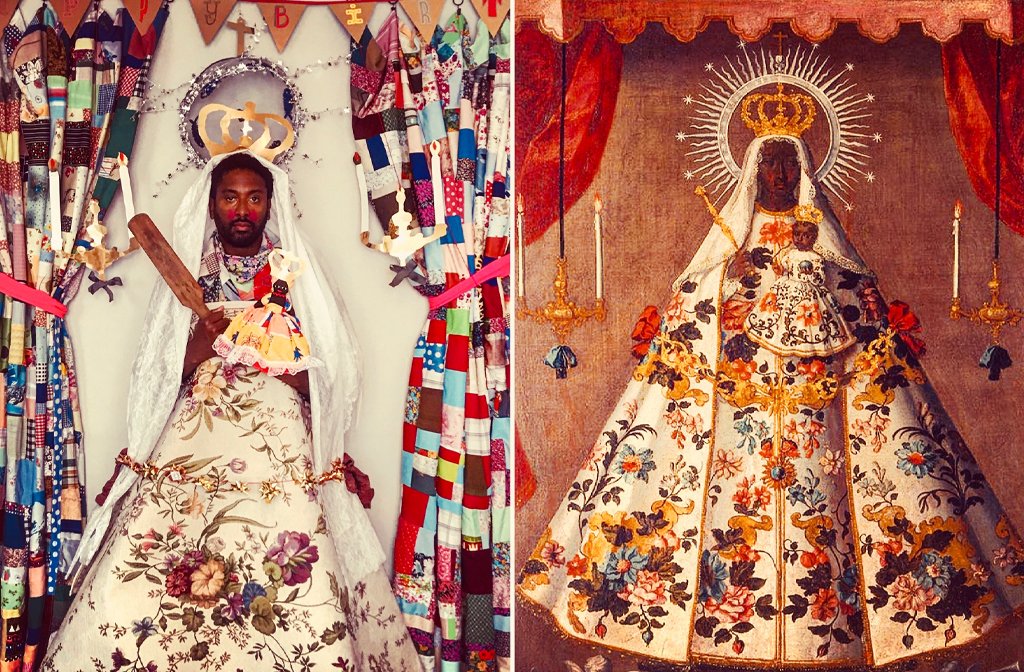
Starting in the first Covid lockdown, Bedford resident, opera singer and BBC broadcaster, Peter Brathwaite embarked on a Twitter project that would exceed even his wildest expectations.
As part of the #GettyMuseumChallenge, Peter began restaging famous paintings with everyday household objects.
Read: Quarantine creativity puts Bedford opera singer in the picture
Peter restaged works that focused specifically on Black portraiture (#BlackPortraiture) using items from his family’s past, and from his cultural heritage in Barbados and Britain.
Now, 11 of Peter’s incredible creations can be seen in ‘Visible Skin: Rediscovering the Renaissance through Black Portraiture’, a new outdoor exhibition across Kings College London’s Strand Campus which opened in September.
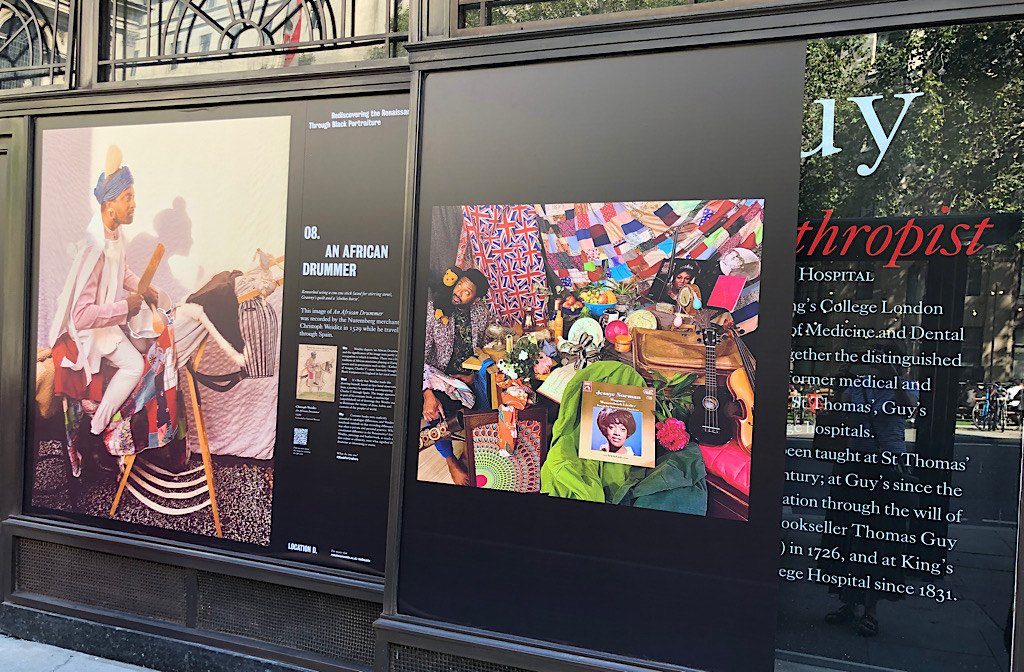
Until December, photographs from this series will be shown in windows across King’s Strand buildings, as part of Westminster City Council’s launch of the Strand Aldwych project, which will transform the traffic dominated gyratory into a new pedestrian-focused public space in London.
They can also be viewed in an online gallery here.
Diversity during the Rennaissance
The Renaissance gave rise to artists such as Michelangelo and Leonardo and enshrined new ideals of beauty.
A still largely unexplored facet of the Renaissance is the diverse, multicultural European life represented in its art, particularly the representation of Black individuals.
Portraits and images of Black people abounded in the Renaissance. They included portraits drawn from life as well as a wider cast of imagined Black identities such as biblical subjects, saints and allegorical figures.
“Rediscovering Black Portraiture is about platforming less dominant voices – specifically the Black lives silenced by the canon of Western Art,” said Peter.
“My collaboration with the Renaissance Skin research team at King’s College London represents some of the stories and lives that have remained hidden from view.
“I hope Visible Skin can start a dialogue that allows us all to speak about a past that is often avoided in the present.”
The images in this exhibition not only testify to the presence and prominence of Black life in Renaissance Europe, they also mirror its complexities. European countries had a long history of trade and diplomatic contact with African kingdoms.
From the 1440s onwards the trade of enslaved peoples began to overlay this longer history. But not all Black or African people in Europe were enslaved or connected to slavery, nor were all Black people African. Princes and diplomats, Black travellers, merchants, emissaries, performers, clergymen, and skilled craftsmen all appear in the records, and the visual art, of the Renaissance.
In the larger project, Peter has reimagined not only Renaissance images but representations from the 11th century to the present day, daring viewers to consider how people of colour have and should be seen and portrayed.
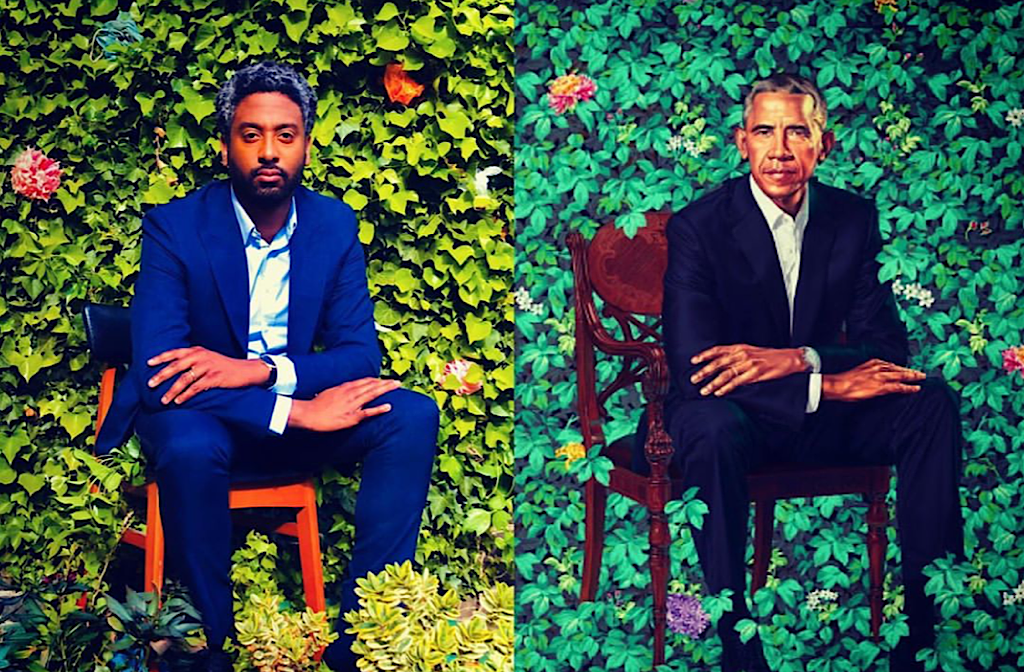
His work brings to the fore the contemporary importance of historical presence – turning this collection of images from a meditation on the past to an interrogation of the present.
Evelyn Welch, Professor of Renaissance Studies, Provost & Senior Vice President (Arts & Sciences) at King’s College London said: “Skin is the most visible part of our bodies – sometimes we ignore it, many times we define and categorise it.
“It has been a privilege to work with Peter Brathwaite and Hannah Murphy, Lecturer in History at King’s on Visible Skin, an exhibition inspired by our Wellcome Trust funded in-depth research on Renaissance Skin.
“Brathwaite’s photography asks us to look again at the visibility of race in the Renaissance period in Europe. We hope this intervention in the public spaces around the Strand will provoke comment, dialogue and discussion.”