
I am pleased that Bedfordshire Police has taken delivery of two specialist Live Facial Recognition (LFR) vans as part of a Home Office rollout of ten LFR vans across the country, equipping police officers with targeted, cutting-edge technology to catch high-harm criminals.
Read: Live Facial Recognition to be deployed in Bedford town centre for first time
Bedfordshire Police previously used LFR successfully during last year’s Bedford River Festival when equipment and specialist officers from South Wales Police were deployed in the town.

LFR will operate according to strict rules, which ensure they are only deployed when there is specific intelligence.
LFR enables law enforcement to target and locate wanted criminals and suspects for the most serious crimes including sex offences, violent assaults, homicide, retail and serious and organised crime. Police services already using LFR have used it to arrest rape, domestic abuse, knife crime and robbery suspects as well as sex offenders breaching their conditions.
Checks are carried out only against police watchlists, which include wanted individuals, suspects, and those subject to bail or court orders.
Each watchlist is tailored to the specific deployment and compiled in accordance with College of Policing guidance. Bedfordshire Police will also comply with the surveillance camera code of practice.
Every van is manned by trained officers who check every match made by the technology. The algorithm being used in the vans has been independently tested and will only be operated in specific circumstances and with robust oversight.
It will be police officers, not the IT that will decide which people may be of sufficient interest as to justify a conversation. LFR is an enabler it is not a decision maker.
The algorithm being used has been independently tested for bias by the National Physical Laboratory (NPL). The testing found that the algorithm is accurate and there is no bias for ethnicity, age or gender.
When there is no match, the image will be deleted immediately. This is not what happens with CCTV images, which may be stored for some months.
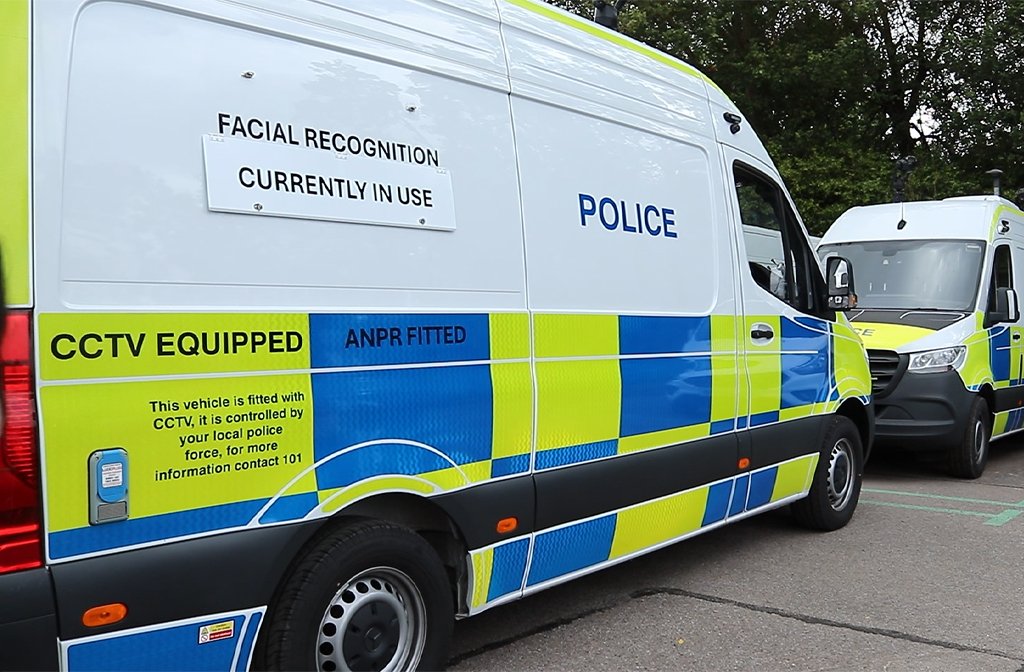
The success of the deployment of the LFR will depend on much more than the technology and the professionalism of the police officers. The public must be confident about its efficacy and the ethics.
When it is ever deployed, there will be effective communications in the area advising the public, critical community stakeholders, and leaders, including councillors and faith leaders, that the LFR technology is being used and where the operation is happening.
Whilst the operational responsibility for the use of LFR is and must always be the responsibility of the Chief Constable, as Police and Crime Commissioner, I have strategic responsibilities. I hold the Chief Constable to account for his application of LFR.
Ethics panel
In order to fulfil my duties and ensure effective governance of the use of LFR, I have agreed a Memorandum of Understanding (MoU) with the Chief Constable, and I will be introducing an ethics panel for the wider use of AI in policing.
The MoU sets out both my and the Chief Constable’s respective responsibilities. It sets out the safeguards, command systems and controls that will be in place to ensure public safety and accountability. I will agree strategic categories when the LFR system may be deployed, whilst the Chief Constable will decide precisely where and when. For example, I have agreed to the use of LFR in town centres as part of the Safer Streets, Safer Town Centre campaign.
The Chief will decide where to place the vans and how to use them. He will report to me on the use and the impact. I will want to hear directly from the public, too.
I am establishing an independent AI ethics panel to advise me and the Chief Constable on the wider use of AI, including LFR. It will have an independent chair comprising community members as well as some specialist experts in AI and ethics.
Any proposed new strategic use of AI will be considered by the panel, and we will take its views into account before proceeding. The panel will also scrutinise the effectiveness and impact of the use of LFR and other AI applications. This will be a transparent process
I expect the panel to be in place within the coming months. I am confident that LFR will enhance public safety while strengthening public trust in policing—supported by robust governance and ethical oversight.
This is a monthly guest column provided by
elected Police and Crime Commissioner, John Tizard (Labour).
It is published unedited and does
not reflect the views of the Bedford Independent.