
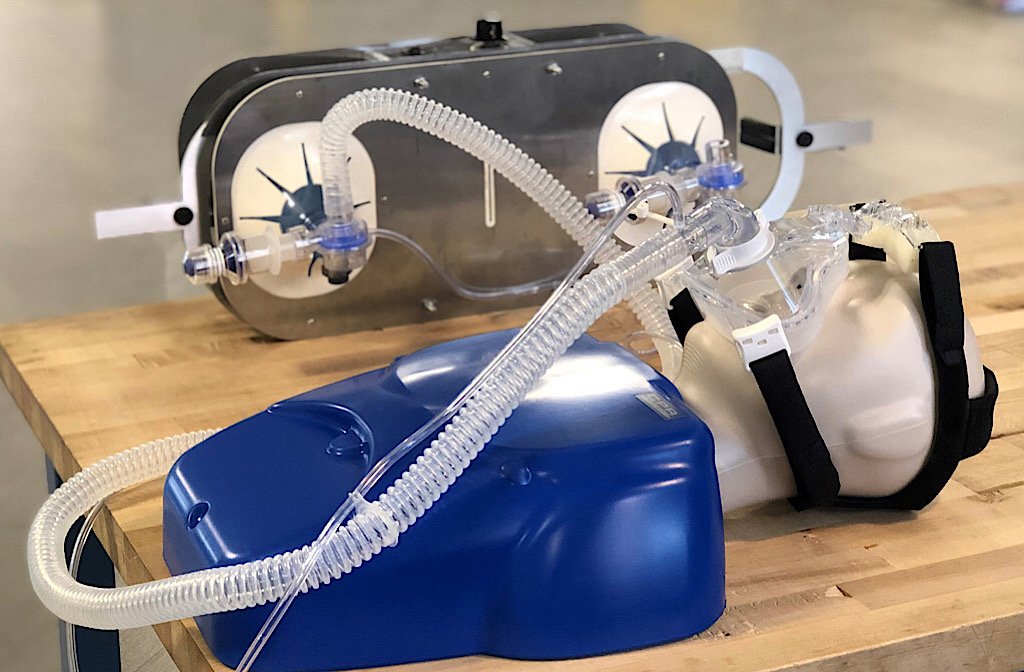
Experts at Cranfield University have designed a simple, low-cost Bag Valve Mask (BVM) ventilator to help critically-ill COVID-19 patients.
The project is a collaboration with Georgia Tech in the USA. The UK design has been built at Georgia Tech in a matter of days.
The makeshift ventilator can serve two patients simultaneously and due to its flat-pack design can be quickly manufactured at scale, costing less than £75 ($100) per unit.
The ventilator can be adjusted easily and updated as needed, and can be linked to an oxygen generator, positive end expiratory pressure (PEEP) valves and filters. Power comes from standard wall adapters or 12-volt vehicle batteries.
The research team intends to make plans for the device to be available to manufacturers as quickly as possible.
The ventilator device works with ‘positive displacement’, forcing air into the patient’s lungs. This process must be controlled to ensure the right amount of air goes in, at the right rhythmic pace – something called the ‘tidal volume’. Though each emergency ventilator can serve two patients simultaneously, their air flow is separate to avoid cross-contamination and flow volumes can be controlled independently.
Professor Leon Williams is head of the Centre for Competitive Creative Design (C4D) at Cranfield University and joined forces with Associate Professor Shannon Yee from Georgia Tech to rapidly design and build the low-cost and robust makeshift ventilator.
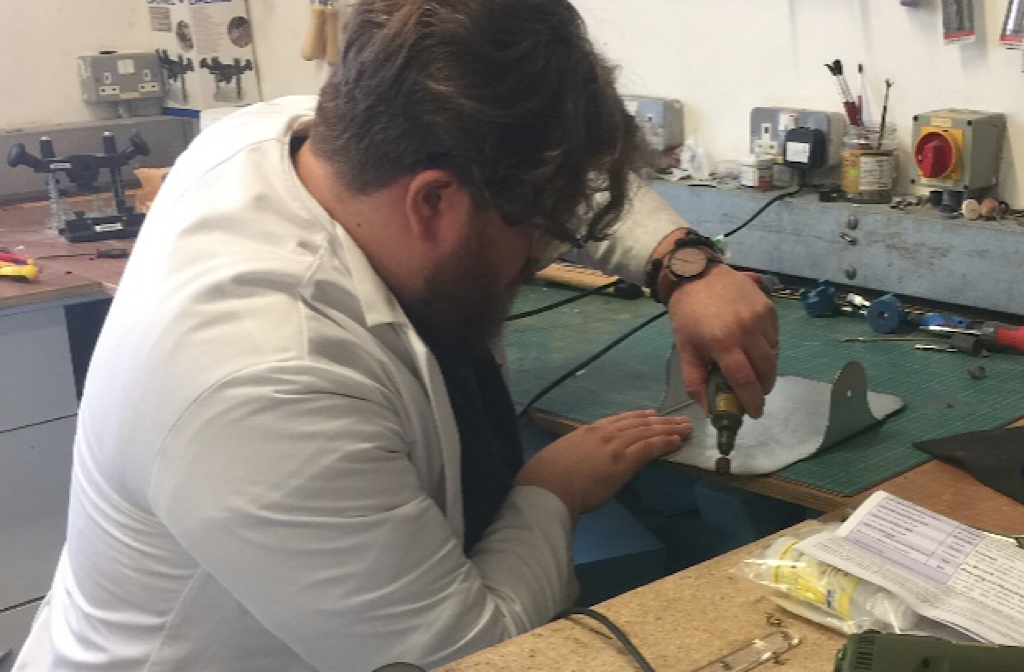
Professor Williams says, “We focused on creating something that can be mass-produced using water-jet or laser cutting, and modular in design to make it easy to assemble and switch out parts. Within five days of getting the brief, an initial design from the Cranfield team was sent to Georgia Tech to test.”
Shannon Yee said, “Our goal was to provide the bare essentials for a ventilator to help with patients who have COVID-19 or acute respiratory distress syndrome. What’s unique about our design is that we have two BVMs per ventilator, which allows two people to breathe with each device that is built.
“We designed the ventilator to be simple to make, cut from sheets of steel. Kits can be assembled and packaged flat for shipping, then reassembled where needed. The manufacturing requires skills that are readily available, and hand tools could even be used.”
Professor Williams continues, “‘We have paid special attention to the requirements of medical specialists to ensure the system is fit for purpose. For example, ensuring that the operator can manually adjust the tidal volume to safeguard the patient, maintaining the lowest pressure possible in the airway to avoid trauma.”
A small batch of the devices has already been assembled for testing.









