
Councils across the UK added £7.8bn to their debt pile in the year to April 2025, according to analysis by the BBC Shared Data Unit – with Bedford Borough Council among those recording some of the steepest increases.
The report said in Bedford, council borrowing rose from £87.7m at the end of 2023/24 to £129.0m at the end of 2024/25 – an increase of £41.4m, or 47.17 per cent.

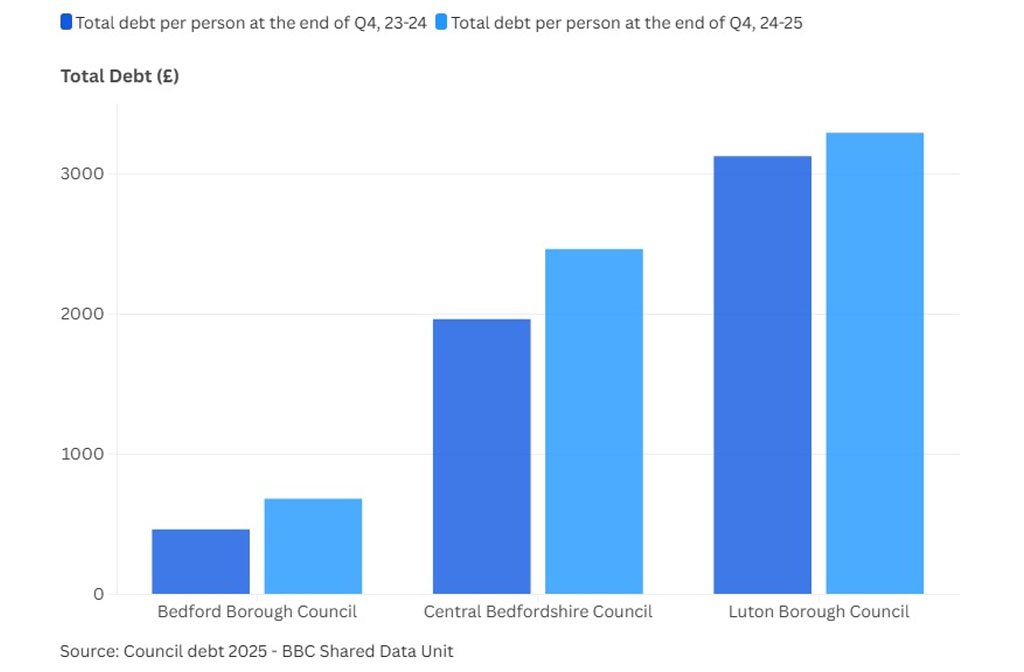
That equates to £679.55 per resident, up from £461.75 the year before, a rise of £217.80 per head.
Meanwhile, over the border in Central Bedfordshire, council debt rose by more than a quarter in the past year.
Figures from the Ministry of Housing, Communities and Local Government (MHCLG) show local authorities owed a combined £122.2bn to lenders as of April 2025. That was the equivalent of £1,791 for every resident, up seven per cent from £114.5bn (or £1,677 per person) a year earlier.
Councils are permitted to borrow to fund projects such as schools, leisure centres and theatres, and in some cases to invest in property designed to generate income.
“Extremely worrying”
But the increase has also been partly driven by a near tripling of short-term lending from central government, which in some cases has been used to plug gaps in revenue budgets rather than fund regeneration.
Jonathan Carr-West, chief executive of the Local Government Information Unit (LGIU), described the growing levels of debt as “extremely worrying”.
He said: “That is not a sustainable system. As one local government finance officer said to me, it’s essentially payday loans for local governments.
“I don’t think the government would say that’s it’s long-term ambition. They would say that is what we have had to do to paper over the cracks while we introduce a new funding system for local government.”
“No comment”
Despite repeated requests for comment, Bedford Borough Council did not respond to questions about the sharp increase, unlike its neighbours Luton and Central Bedfordshire, which both set out their borrowing strategies.
In Luton, debt rose from £722.2m in 2023/24 to £760.9m in 2024/25 – an increase of 5.36 per cent, or £3,293.36 per resident.
Councillor Rob Roche, Luton’s portfolio holder for finance, said the borrowing was part of a “strategic commitment to long-term investment in Luton’s future” through regeneration, housing and infrastructure projects.
He stressed that much of the debt was structured as “income-generating”, including loans to the council’s airport company, and said the figures were misleading without this context.
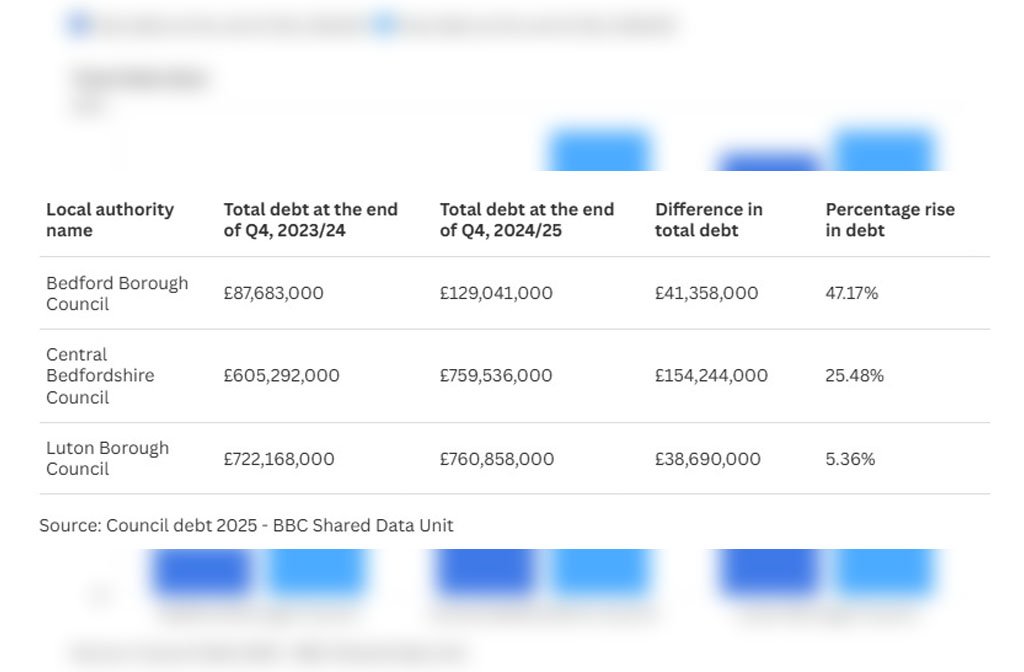
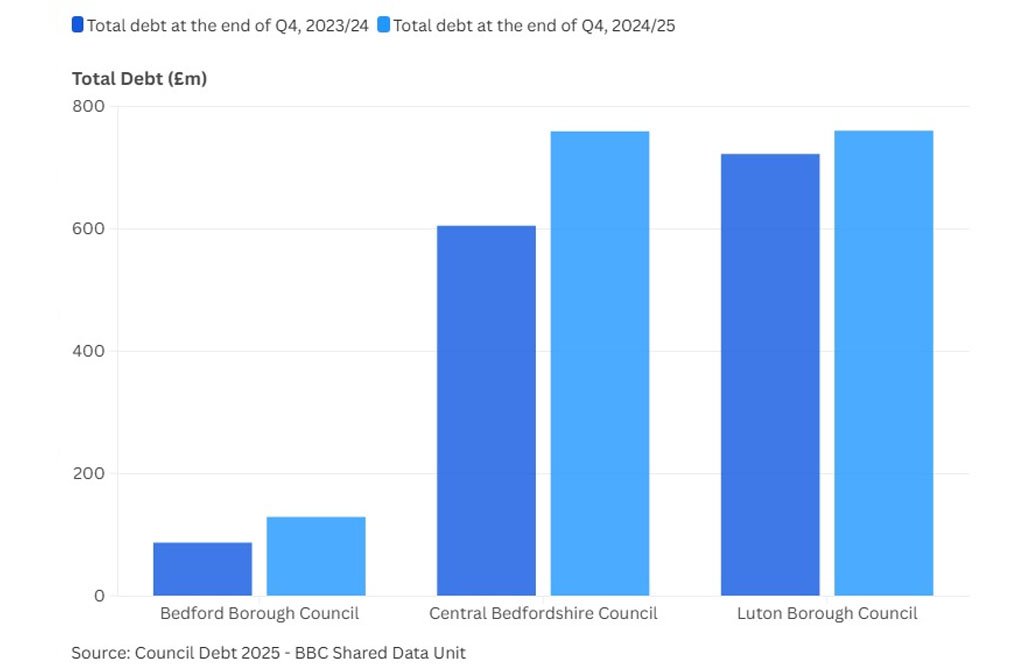
In Central Bedfordshire, total debt increased from £605.3m at the end of 2023/24 to £759.5m a year later – a rise of 25.48 per cent
That equated to an increase from £1,963 per person to £2,464 per person – up by £500.
Councillor John Baker, Central Bedfordshire’s executive member for finance, said borrowing had been used to fund “essential projects such as new schools, care homes and maintaining the roads” but added that higher inflation had driven up borrowing costs. He said the council had slowed down new projects and was selling surplus assets to protect taxpayers.
Mr Carr-West said while some funding reforms are being introduced by government, including multi-year financial settlements, “it is too early to see whether those are really going to turn the ship around”.
He added: “We survey every council in the country every year. Earlier this year, still one third of councils are telling us that if nothing changes in terms of how they’re funded, they are going to go bust within the next five years.
“Now that’s down from 50 per cent in 2024. So we have made some progress.”r cent of councils telling us that in 2024. So we have made some progress. ”
by John Guinn
Local Democracy Reporter