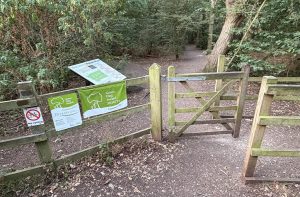
Bedford Borough Council’s Bugs and Bees Project was created to improve the local environment for pollinators, a meeting heard.
A report presented to the Climate Change Committee on Monday (6 February) said it is generally accepted that pollinators are in decline.
This, it said, will ultimately affect plant growth, food production and biodiversity.
To improve food sources and habitats available to pollinators the council launched its Bugs and Bees Project in June 2020.
The council said this project also improved the borough’s parks and open spaces, and increased biodiversity in the area.
However, as the areas set aside for bugs and bees areas are different to the previous planting techniques, so the council has been working to engage with the community to explain the reasons behind the project
“More importantly, to let them know what they should expect to see over the whole of the year,” said Paul Pace, head of environment at Bedford Borough Council.
“Obviously some of these planting schemes are very different to what perhaps they have seen in the past.
“And it’s also getting them to understand that whilst certain times a year they look very nice, at other times a year. they can appear dead when they seed, etc.
“So that’s a key part for us to explain what it looks like on the ground and to get the community and those living in around these areas to understand and also support the schemes,” he said.
Mr Pace told the committee that the council experiments with seeds and planting as part of the project.
“We did put some wildflower turf in the town centre, but it wasn’t a particularly great success,” he said.
“But we are learning and the sites are getting better and better,” he said.

Councillor Lucy Bywater (Green, Castle) asked: “Is anything being done to monitor the impact of all these schemes on biodiversity?”
Mr Pace replied: “We’ve had a number of surveys done by the Wildlife Trust in relation to what impacts [the areas] are having.
“And also looking at some of our other parks and areas to see what would be the impact if we planted something like Bugs and Bees there.
“Just to see what the best solution may be before we actually go there and do any work in those areas,” he said.
The report also said that outside of the Bugs and Bees project, the council is committed to reducing the amount of chemicals used in green spaces.
Chemical usage is limited to sports ground maintenance, treating hardstanding areas and in play areas as required.
Mr Pace said: “We’d like to obviously reduce that down and we try to do that where possible.
“Where we still do obviously weed spray we use direct droplets that apply direct to the area with fully trained operatives to use the minimum amount of weed sprayer chemical that we can possibly get away with.
“We would like to give it up completely, but there is no magical solution out there at the moment.
“We have tried a lot of new products … but they don’t have a very good success rate unfortunately.
“So we still do use a small amount but nothing compared with what we used to use years ago,” he said.
If residents would like further information about this project they can email bugsandbees@bedford.gov.uk.
by John Guinn
Local Democracy Reporter