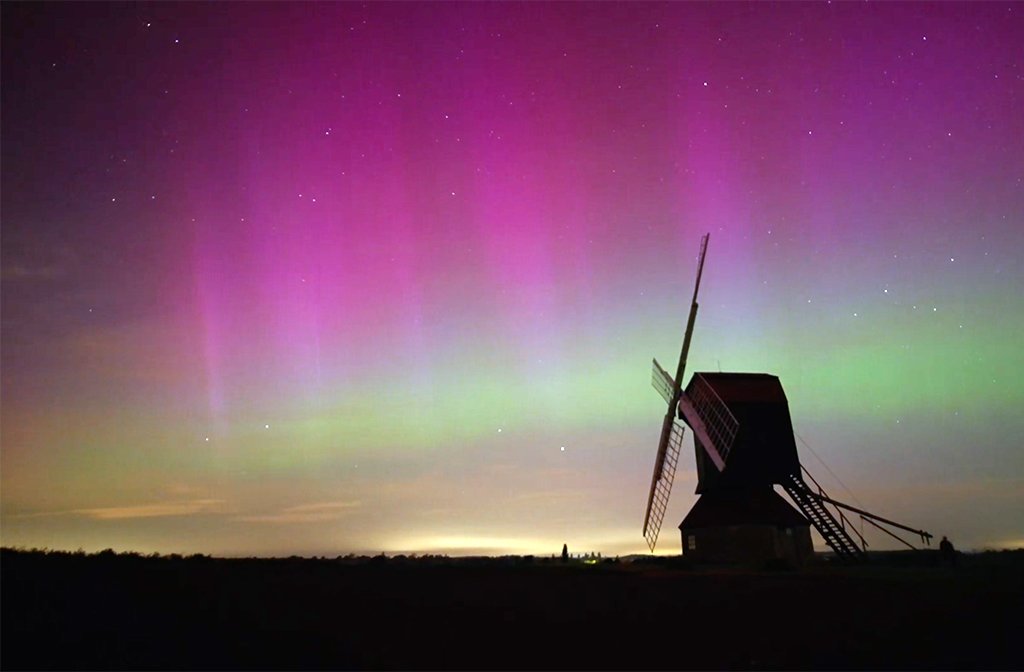
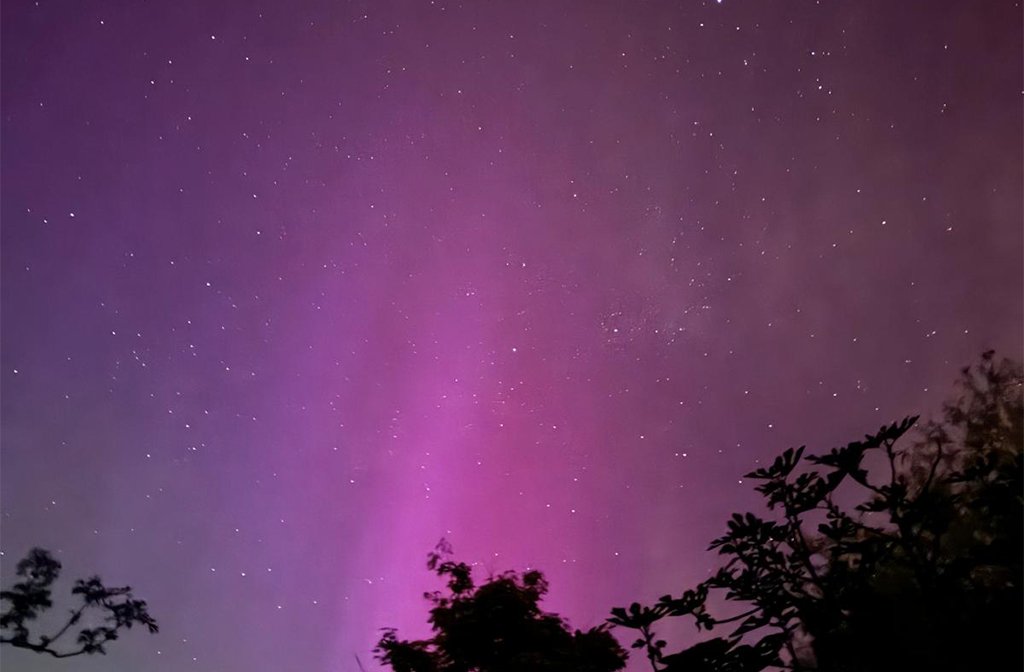
In what was a rare display of nature’s beauty, the skies of Bedford Borough were awash with colour last night as a solar storm created a stunning display across the UK and parts of the world not normally treated to such an event.
Initially, it was predicted that the natural phenomenon would only reach as far as the north of England but this was quickly proven to be wrong as Bedfordians uploaded beautiful pictures to local community Facebook groups.

This morning we woke to reports that the cosmic event even reached as far as Norfolk, Kent, Dorset, Devon and Cornwall. There were also sightings in the Czech Republic and Germany in central Europe and videos have even emerged of them above Texas, USA.
Last night’s celestial display was caused by a class 5 ‘extreme’ geomagnetic storm, according to the US National Oceanic and Atmospheric Administration (NOAA), the first of its kind in almost 20 years.
It’s expected to last all weekend, so if you missed it last night you may be able to see some tonight (Saturday). While they may be faint to the naked eye, using a camera to view them will help reveal the colourful display.
Local videographer Don Weerasirie set up his camera and captured mesmerising time-lapse footage of the aurora over the Stevenington windmill.
Meanwhile, several Bedfordians shared their pictures across social media, and have kindly allowed us to share them with a wider audience on our pages.
Shortstown
With thanks to Rebecca Potter
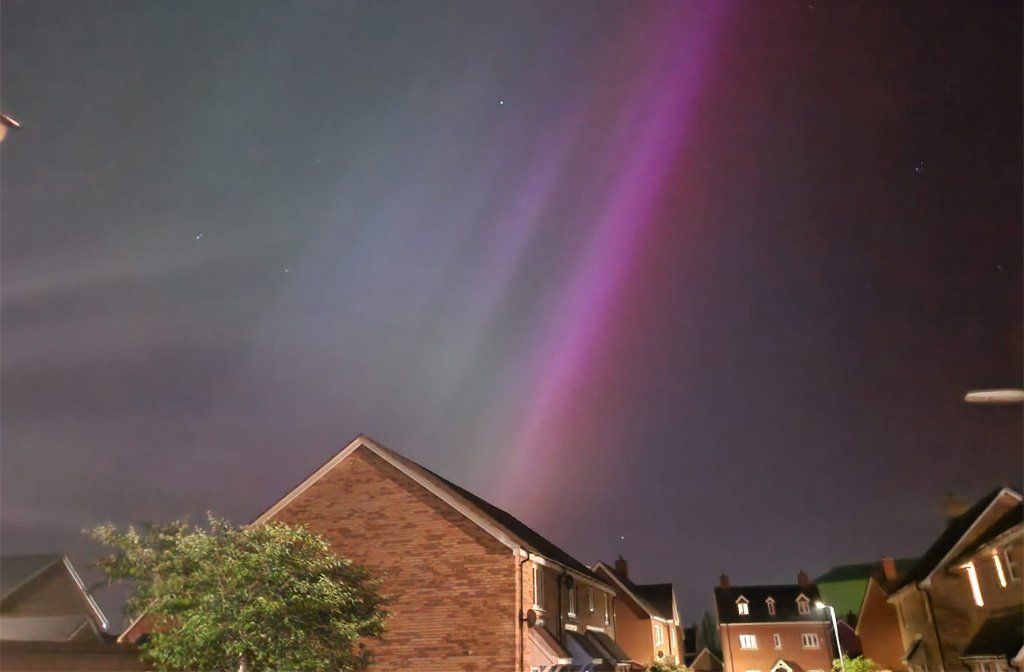
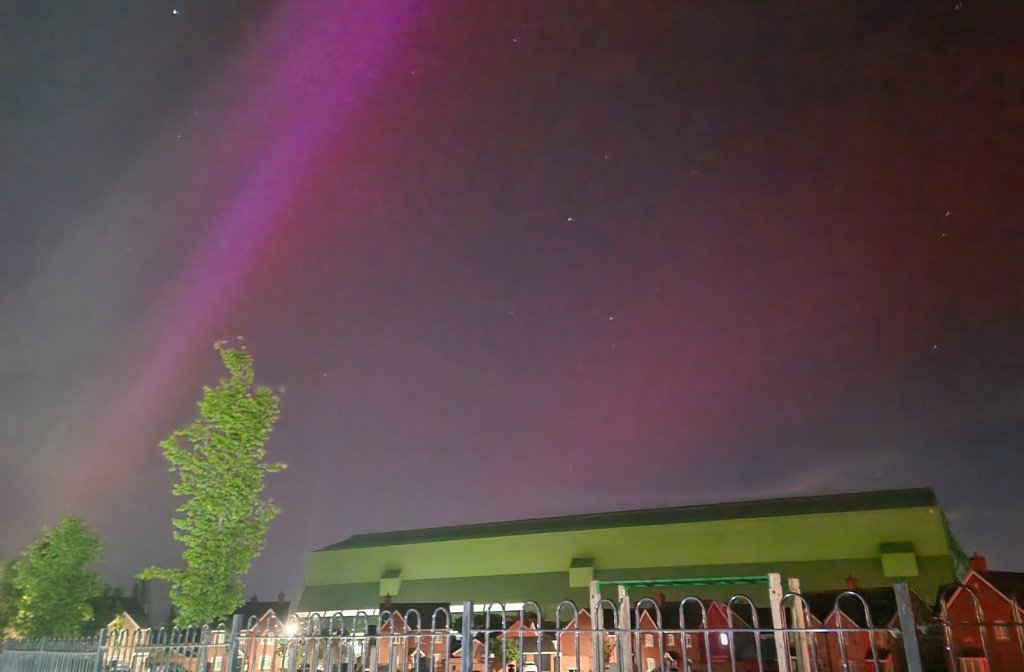
Riverfield/Goldington Area
With thanks to Vicki Eley
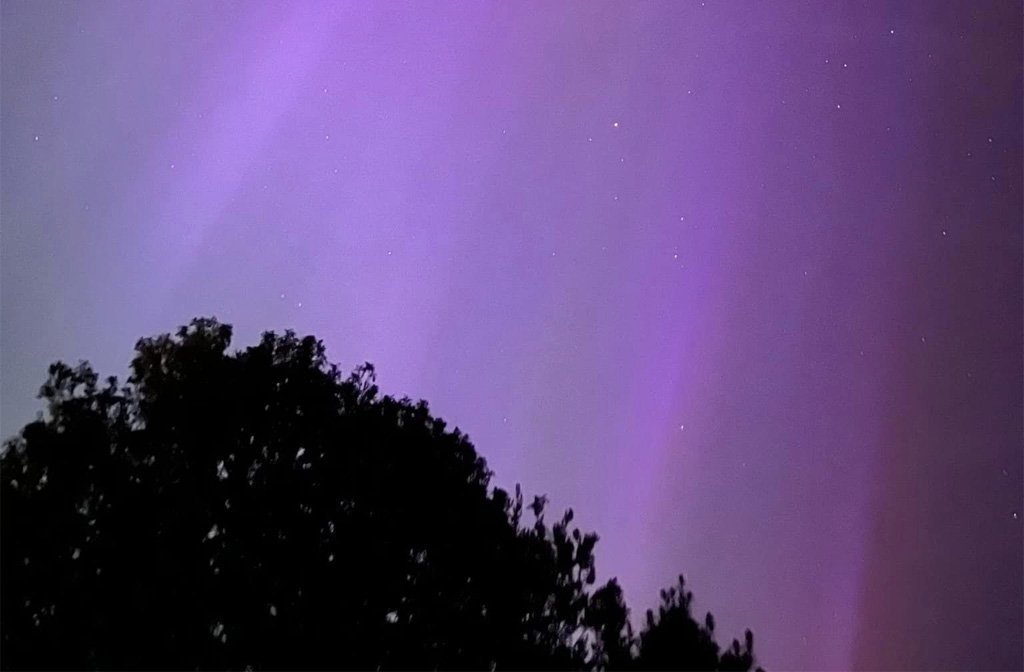
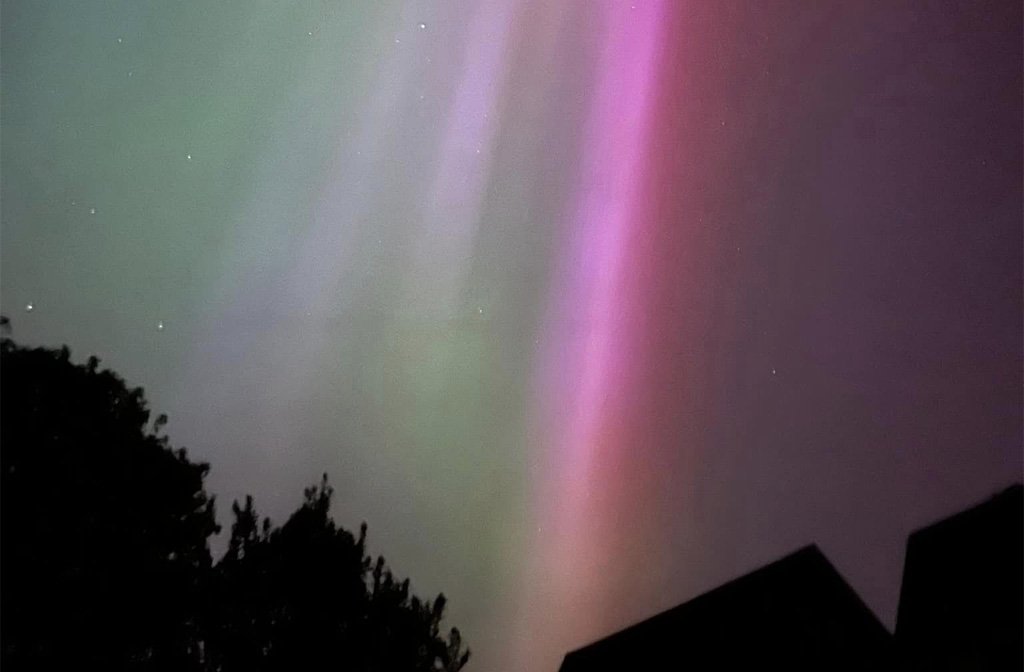
Putnoe
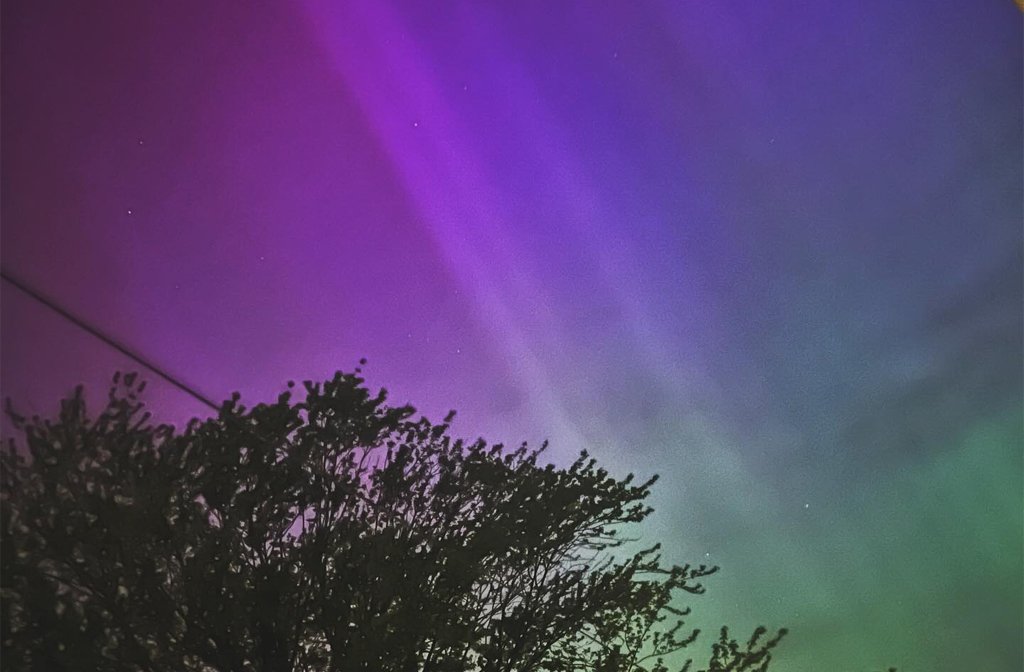
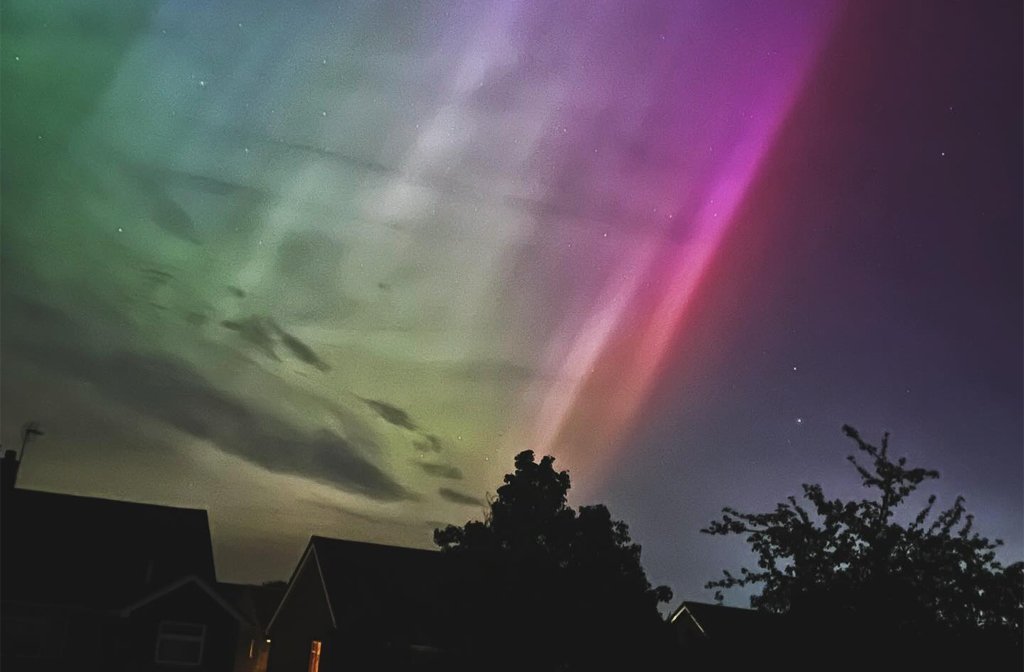
Cranfield
With thanks to Lesley O’Mara
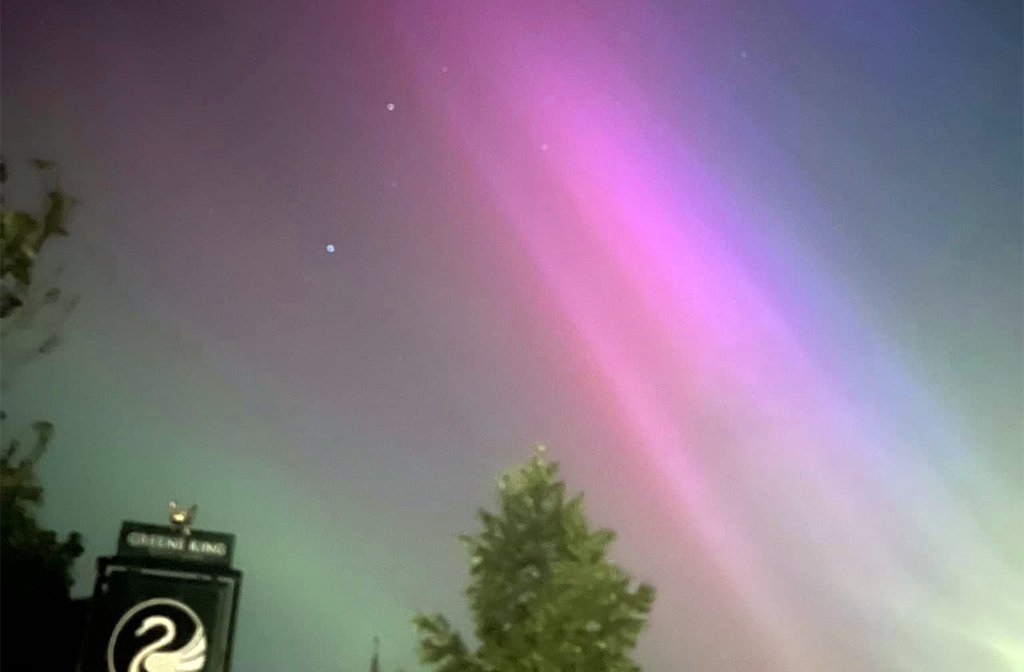
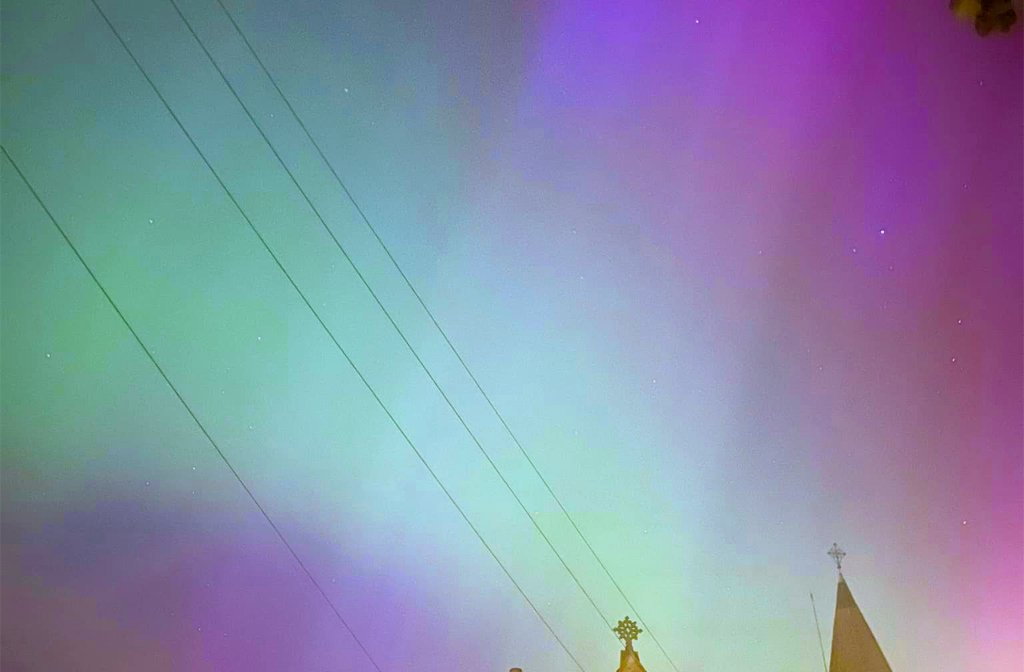
Bedford/Cambridgeshire border
With thanks to Phil Lack & Black Cat Radio
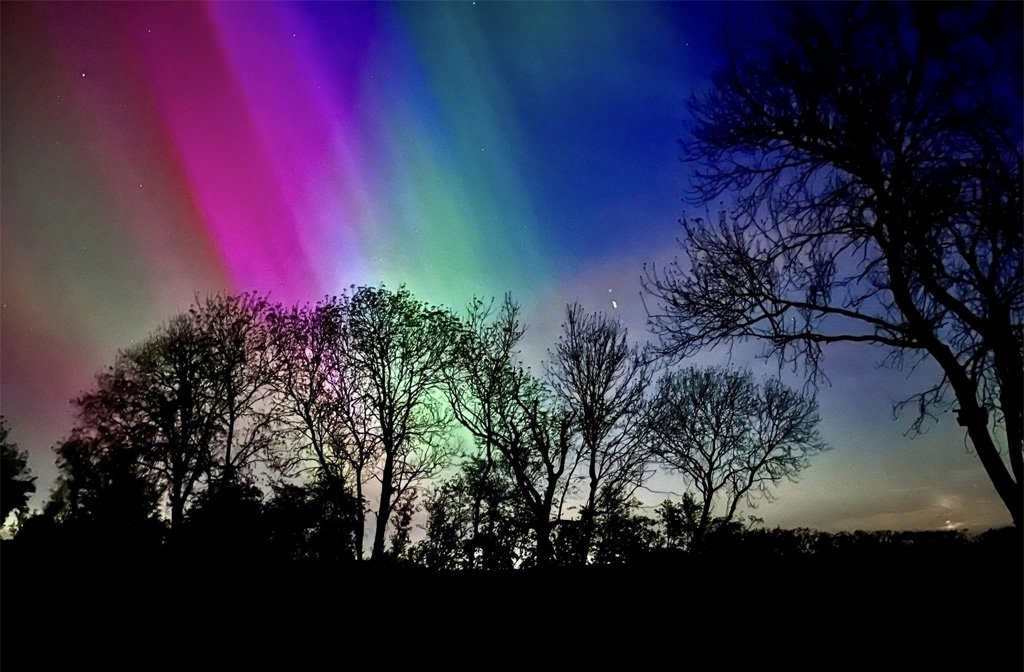
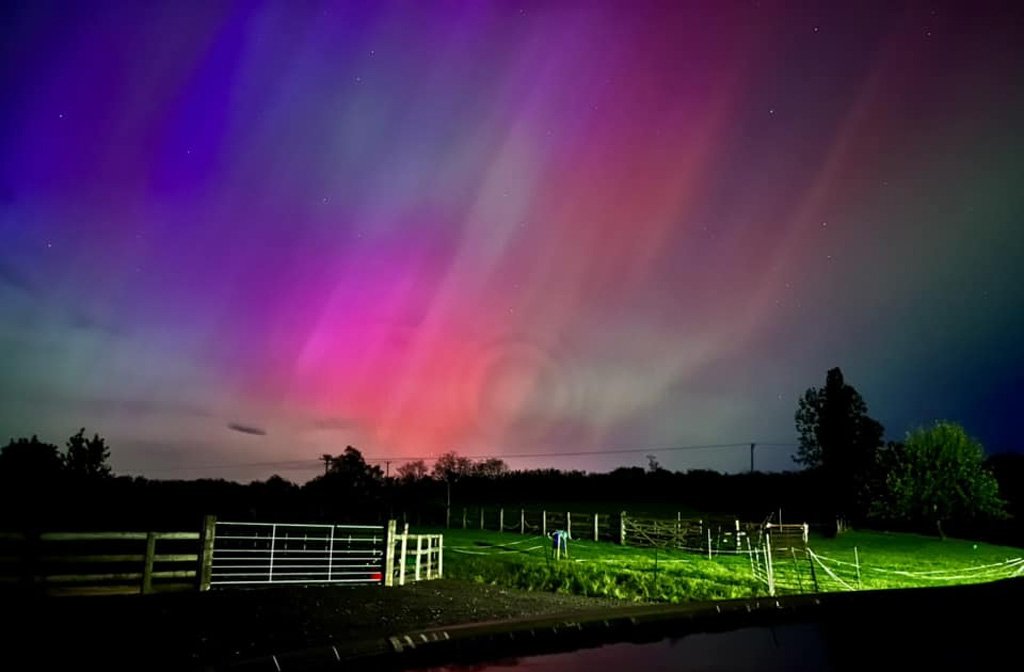
Woodlands
With thanks to Ruby Elliott-Willey
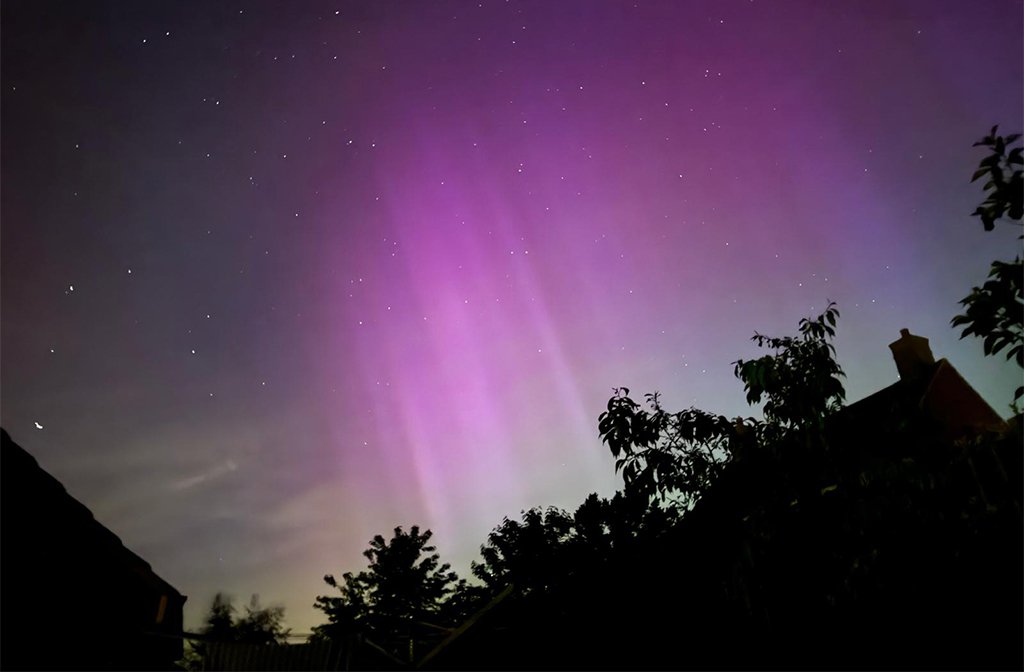
What causes the northern lights?
The Northern Lights, or aurora borealis, are a natural phenomenon caused by charged particles that begin their life at the sun and appear as bright, swirling, colourful ‘curtains’ of light when they hit the Earth’s atmosphere.
These particles are always hitting the earth but we aren’t affected by them on the ground as the Earth’s magnetic field stops them from getting too close. It’s the charge of the particles hitting the charge of the magnetic field that creates what we see above us.
The closer to the poles of the Earth you are the more likely you will see auroras on any given night.
But, sometimes the Sun emits huge clouds of particles during coronal mass ejections.
These can then create striking displays that can be seen much further away from the poles as millions of tonnes or particles travel 93 million miles (149 million kilometres) across space and hit the earth’s atmosphere at 45 million mph (72 million kph).
While the northern lights are seen in the northern hemisphere close to the North Pole, the Southern Lights, aurora australis, can be seen nearer the South Pole.
The lowest part of an aurora is usually about 50 miles (80 km) above the Earth’s surface but the highest part may be up to 150 miles (241km) high.