
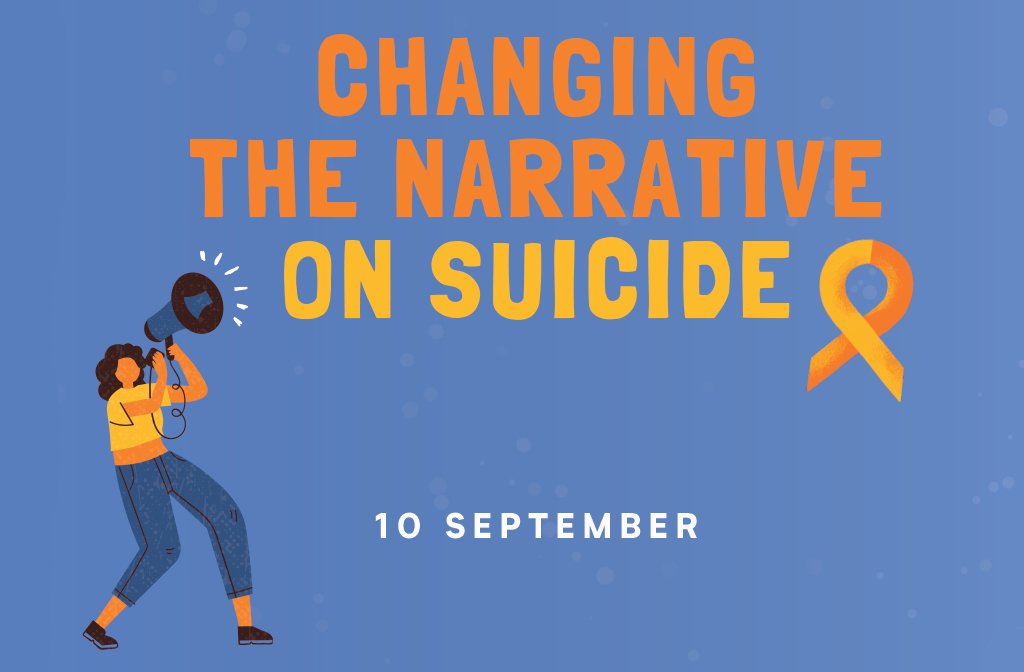
This Wednesday marks World Suicide Prevention Day. Samaritans are sharing a simple but powerful message: “If you think someone might be suicidal, take action, interrupt their thoughts and show them you care.”
Suicide is often hidden behind stigma, yet its impact is devastating and far-reaching. Every 90 minutes, someone in the UK or Ireland dies by suicide, and one in four people will experience suicidal thoughts.

Self-harm among children and young people is particularly concerning. NHS England data from 2023 shows nearly 10% of 8–16-year-olds and over a third of 17–24-year-olds have harmed themselves at some point.
World Health Organisation research suggests more than a third of 15-year-olds in the UK have self-harmed, with girls at the highest risk, although the gender gap is narrowing.
Nearly 90% of self-harm incidents among 12–17-year-olds go unreported, meaning many young people struggle alone.
Men at greater risk
Early intervention is vital. The government is providing access to a specialist mental health professional in every school in England and rolling out Young Futures hubs to offer community-based support.
Locally, this means clear routes for children and families in BLMK to access help before crisis points are reached.
While self-harm is more common among young women, men remain at the highest risk of dying by suicide. Men account for three in four suicides, and suicide is the leading cause of death for men under 50.
The government has committed to a men’s health strategy targeting key drivers such as gambling, debt, and substance misuse.
Locally, the BLMK Suicide Prevention Pathway Service provides one-to-one well-being support for adults over 18 who may not be in immediate crisis but are experiencing suicidal thoughts.
Anyone can self-refer or be referred via a GP, NHS 111, A&E, Crisis Cafés, or friends and family.
Nationally, the Suicide Prevention Consortium advocates for “no wrong door” and person-centred care. This approach ensures anyone seeking help is welcomed and supported, not turned away.
The government is also taking significant steps to address online harms related to suicide and self-harm through the Online Safety Act 2023. This legislation imposes new duties on online platforms to protect users from illegal content and content harmful to children.
Key provisions include:
- Criminalising the Encouragement or Assistance of Serious Self-Harm – which includes acts such as sending harmful substances or providing instructions for self-harm;
- a Duty to Prevent Exposure to Harmful Content – Online platforms are required to implement systems and processes to proactively prevent users, especially children, from encountering content that encourages, promotes, or provides instructions for suicide and self-harm;
- and Rapid Removal of Illegal Content, including material that encourages or assists suicide or self-harm.
These measures aim to create a safer online environment, particularly for vulnerable individuals, by holding platforms accountable for the content they host and ensuring timely intervention when harmful material is identified.
If there is one key message, it is this: suicide is not inevitable. Suicidal thoughts can be interrupted and lives saved. Sometimes, all it takes is noticing someone is struggling, asking if they are okay, and showing that you care.
This World Suicide Prevention Day, take a closer look at your family, friends, and colleagues. No one should feel alone with suicidal thoughts, because tomorrow may be too late.
If you’re worried about someone or want to learn more about interruptions, visit the Samaritans’ webpage on how to interrupt someone’s suicidal thoughts.
Here’s the complete list again, now with key contact details for the national helplines:
Local support
- Bedford Samaritans – Call 116 123 (free, 24/7)
- Mind BLMK – Local branch of Mind (community support, Crisis Café)
- Suicide Prevention Pathway Service (BLMK) – Support sessions for adults with suicidal thoughts (via GP, NHS 111, A&E, Crisis Café, or self-referral)
- CHUMS Bedfordshire Suicide Bereavement Service – Support for adults and children bereaved by suicide
- Bedford Open Door – Free counselling for young people (13–25)
- The Ollie Foundation – Suicide prevention training and awareness
National helplines:
- Samaritans – Call 116 123 (free, 24/7) or email jo@samaritans.org
- Shout – Text SHOUT to 85258 (free, 24/7)
- Papyrus HOPELINEUK (for under 35s) – Call 0800 068 4141 or text 07860 039 967
- CALM (Campaign Against Living Miserably) – Call 0800 58 58 58 (5pm–midnight, every day) or webchat via thecalmzone.net
- National Suicide Prevention Helpline UK – Call 0800 689 5652 (24/7)
- SANEline – Call 0300 304 7000 (4pm–10pm, daily)
- Childline – Call 0800 1111 (for children and young people, free, 24/7)
This is a monthly guest column provided by
Mohammad Yasin, Labour MP for Bedford & Kempston.
It is published unedited and does not
reflect the views of the Bedford Independent.









