Sixty local government pension funds, including Bedfordshire Pension Fund, have invested a total of £8bn in funds that pay for the construction of gas ports along the Gulf Coast, according to revelations by the Bureau of Investigative Journalism (TBIJ).
Residents living in Texas, Louisiana, Mississippi, Alabama, and Florida say these terminals are already causing health problems in their communities, and experts say they represent one of the biggest threats to the planet’s future.

TBIJ reports said that over seven million school staff, civil servants, and other public sector workers either save with or receive their pensions from local government pension schemes.
Adding that these revelations have “sparked concerns” among local councillors who oversee their pension funds and have urged them to get out of fossil fuels.
While the companies behind these projects are enjoying a boost from the war in Iran, they could tumble in value as the world shifts to renewable energy.
Baroness Hayman, a non-party political peer, told the TBIJ, “Many UK pension funds are already reducing their exposure to fossil fuels, recognising the risks these investments pose.
“But with £3 trillion held in UK pensions, and the climate and nature challenge growing, there is a clear opportunity to better protect savers from rising financial and environmental risks.”
Members of the local government pension scheme were dismayed to find what they were bankrolling.
Global links
“The UK could be funding a safer, healthier future for all via renewable energy generated in the UK that is cheap, safe, clean and owned by us,” said Jane Thewlis, a retired social worker.
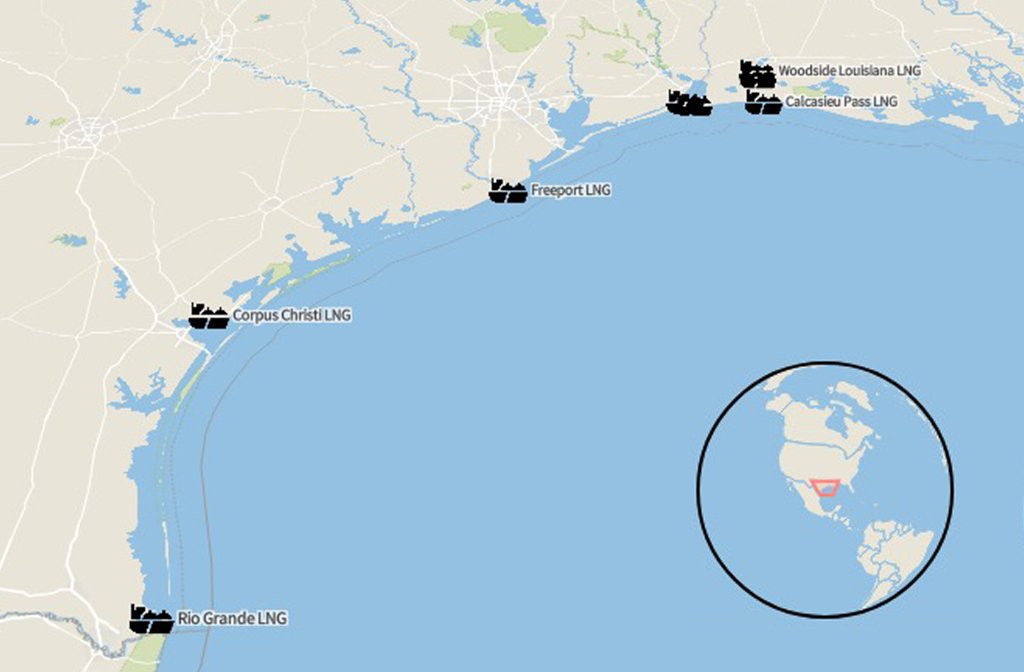
The giant white orbs containing liquefied natural gas (LNG) look almost alien. Scores of these terminals are popping up along the 1,200-km stretch of Louisiana and Texas’ coastline, a building frenzy turbo-charged by President Trump’s second term.
If all the planned terminals are built, the LNG produced in the US would generate the same amount of greenhouse gases each year as every EU country combined, says Jeremy Symons, a former official at the US environmental regulator
UK savers in 12 local government pension schemes, including Bedfordshire’s, have invested over £360m in Stonepeak funds that financed these plants, according to figures from council records and data provider Pitchbook.
Since starting operations, Calcasieu Pass has reported hundreds of emissions violations and paid authorities a $245,000 settlement. That’s unlikely to make much difference to its owner, Venture Global, a major Trump donor.
TBIJ said its shares rocketed by more than 80 per cent after the US and Israel started bombing targets in Iran.
Roishetta Ozane, a resident turned activist, lives near a number of these gas terminals.
Health concerns
She told TBIJ that pollution from the nearby gas, petrochemicals and oil infrastructure has caused asthma and an increase in cancer in the area, an account borne out by academic research.
“We’re seeing more women develop health issues that are living near these facilities, having pre-term babies or having miscarriages,” she said. “We’re seeing our air quality deteriorate. We have a drinking water crisis.”
She said residents had to deal with noise pollution from construction and the flaring of excess gas from the terminals.
Two of her children have asthma. She told TBIJ the doctor said pollution may have exacerbated the seizures suffered by her son, who died last year.
“When my son passed away, I was like, what are we doing this for?” she said.
“We’re fighting for our children, for our future, for our community, but yet they’re dying.”
In total, the Bureau of Investigative Journalism found eight US-based LNG terminals backed by UK pension money. Taken together, those terminals would produce more CO2 each year than the entire UK, several times over, according to Sierra Club data.
When it comes to curbing carbon emissions, council pension funds and campaigners have tended to focus on selling their shares in companies like BP and Shell. But a growing portion of pension funds is invested in so-called “private markets”.
Hidden investments
Typically, this involves putting money into a number of big funds, which in turn invest in everything from private equity to property to company loans.
Private markets can offer healthy returns. They’re also something of a black hole for information, making it much more difficult to follow the money. And they’re often excluded from the scope of council climate commitments.
The upshot is that even pension schemes that have promised not to invest in fossil fuels have ploughed money into funds backing major gas projects.
In Bedfordshire, pension committee papers published this year show the fund’s investment pool, Border to Coast, says it does not apply “broad exclusions for any specific sectors or stocks”.
A February report to the Local Pension Board (5 February 2026), titled “Responsible Investment Policies and Stewardship Code,” said that exclusions and divestment can, in some cases, “remove the ability to drive change within a company”.
The same report said there are limited exclusions covering thermal coal, oil sands production, thermal coal power generation and controversial weapons.
Investment policy

Bedfordshire Pension Fund is administered by Bedford Borough Council and invests much of its money through the Border to Coast Pensions Partnership alongside other local authority funds.
It did not respond at the time of publication when asked if it had invested, directly or indirectly, in any Stonepeak-managed funds.
Cllr Lucy Bywater (Green, Bedford Borough Council) said: “Given the climate emergency and the increasing rollback of any climate actions in the US, for example, it’s more vital than ever that pension funds go further than engagement.
“Stopping investing pensioners’ money in companies that trash the planet has to be pursued.
“This has the important benefit too of reducing exposure to long-term risks, such as stranded assets and climate-related financial decline.
“Investing instead in local renewable energy would have multiple economic and environmental benefits.”
Calls for change
In February 2024, West Yorkshire Pension Fund said it would no longer lend to the oil, gas and coal sector.
According to the new standards set by the authority, cllr Andrew Scopes said, the decision to invest in a Stonepeak fund that bankrolled an LNG plant on Ozane’s doorstep would be “very difficult to justify”.
Ms Thewlis, a campaigner and member of the scheme, said: “We are particularly concerned if [West Yorkshire Pension Fund] is funding LNG infrastructure in the US, which is not compatible with a livable climate.
We expect our elected representatives to use our money to fund a safe future – not to hasten the end of humanity.”
West Yorkshire Pension Fund said its environment, social, governance policy “takes account of the current status and role of gas and oil within the energy transition, particularly with regard to reliability, affordability and coal displacement”.
It said LNG is seen as “a bridge between today’s fossil-fuel-dominated energy system and a future low or zero-carbon one”.
Stonepeak and the LNG port operators did not respond to TBIJ’s requests for comment.
By Josephine Moulds and Simon Lock,
The Bureau of Investigative Journalism
Via John Guinn, Local Democracy Reporter