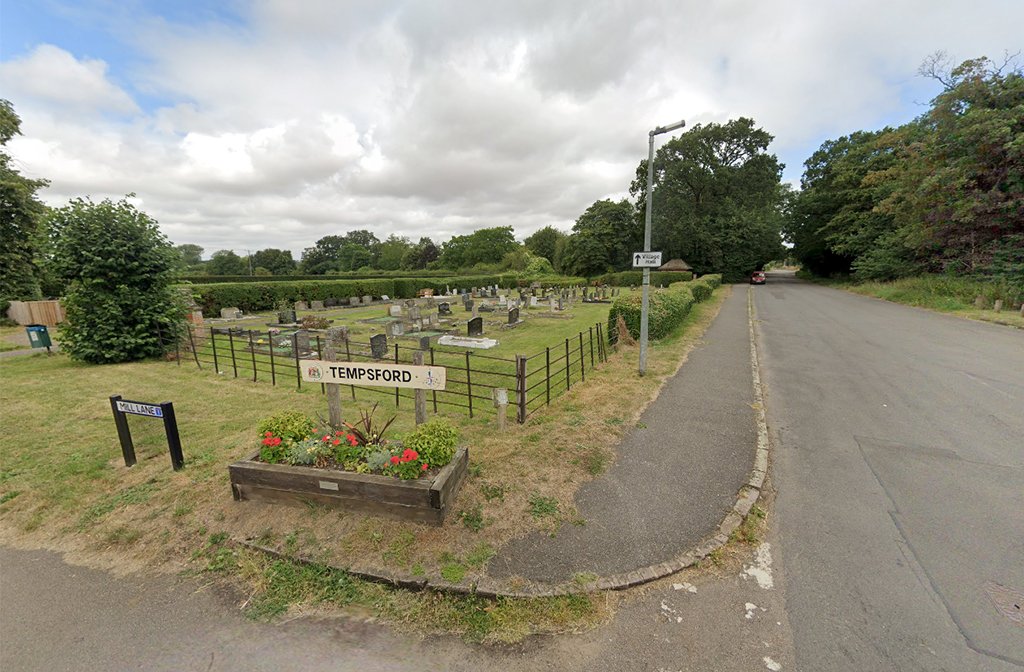
Plans for a new town at Tempsford have moved a step closer to focus after a House of Lords committee warned that places like it will fail unless ministers provide clear national leadership, early infrastructure investment and meaningful local engagement.
In a new report, New Towns: Creating Communities, the House of Lords Built Environment Committee backs the Government’s new towns programme in principle, but says it risks producing weak, unsustainable places if it is driven too heavily by housing numbers rather than by the creation of real communities.

This will have an impact in Bedfordshire because Tempsford remains one of the Government’s most serious options.
Read: New town at Tempsford among government plans for the biggest housebuilding push in 50 years
Ministers have already identified it as a “particularly promising” location, and the Government’s own Strategic Environmental Assessment says it could deliver more than 40,000 homes around a proposed new East West Rail station.
While no final decision has yet been made, the Government’s own documents now make clear the scale of what is being considered at Tempsford.
North Bedfordshire MP Richard Fuller said ministers had confirmed the site would be “over 40,000 homes”, which he said would amount to a town of around 100,000 people.
Taking in nearby St Neots and Sandy, he said, the wider impact would be closer to “about the size of Bedford”.
That makes Tempsford far more than a village expansion. It would be one of the biggest single development projects in Bedfordshire for generations.
Lords warn housing numbers are not enough
The Lords committee says the Government must stop treating new towns simply as a way to hit housing targets.
Its report says these places should drive inclusive growth, reduce inequality and become examples of healthy, sustainable living.
It argues that the current emphasis on unit numbers “is not enough to give the programme meaning and create thriving and successful communities”.
Peers are again calling for a single autonomous national body, reporting to a Cabinet-level minister, to coordinate departments, oversee quality, and manage long-term delivery.
They also say the Government needs to set out a “clear, galvanising vision” if the programme is to keep public, political and investor support over the decades required to deliver it.
Lord Gascoigne, chair of the committee, said: “The new towns programme needs a compelling national vision.
There has to be strong national leadership, clear coordination across government, and all supporting delivery on the ground at the local level to create sustainable, flourishing communities for the decades ahead.
“The purpose of the new towns programme must go beyond just meeting housing numbers. People need to be able to thrive, rather than simply survive, in these new towns.”
Read: New town at Tempsford could reshape Bedford’s future
Clear checklist
The report sets out a clear checklist for any future new town.
It says infrastructure must come early, not years after people move in. That includes transport, health services, green space, social infrastructure and temporary community facilities.
It says new towns must be walkable, support active travel, include high-quality public spaces and biodiversity, and avoid becoming homogenous estates. Local heritage, landscape and existing buildings should be used wherever possible to create places with their own identity.
The committee also says health and accessibility should be built in from the start, with every new town appointing an Accessibility Champion and including at least one flagship intergenerational housing pilot in the programme.
Most significantly for places like Tempsford, peers say communities must be involved before sites are even formally designated, and that this engagement must be genuine rather than tokenistic.
That message lands directly in Bedfordshire, where residents have already spent years living with uncertainty around Tempsford.
The Bedford Independent has previously reported that the prospect of a new town there has already influenced wider local debates, including East West Rail planning, the future of a proposed solar farm in the area, and even discussions around local authority boundaries.
Read: Tempsford solar farm project put on hold until Government Plans announced

In that context, the Lords’ report seems to suggest a checklist of the questions Bedfordshire is already asking.
How much infrastructure would be needed? How early would it come? What would happen to local roads, water, health services and schools? How would the surrounding villages be affected? And how much say would local people actually have?
Environmental warning signs
The Government’s Strategic Environmental Assessment, published alongside the new towns consultation, strengthens the sense that Tempsford is both a high-opportunity and high-impact site.
It says the location could help deliver housing, jobs and economic growth in the Oxford to Cambridge Growth Corridor, with the potential to become a hub in its own right. But it also identifies significant potential negative effects on the landscape, agricultural land, biodiversity, habitats, and air quality.
The assessment says Tempsford’s environmental effects are likely to be greater than at some other locations because it would be a stand-alone settlement on open greenfield land, rather than a place making greater use of brownfield or already urbanised sites.
It also warns that construction and traffic could affect nearby communities, including Tempsford and Little Barford, and says major transport investment would be needed to avoid putting excessive pressure on the road network.
Fuller: “Government must bring local people with it”
Richard Fuller MP said locals were not naive about the possibility of development in Tempsford, but argued the scale now under discussion goes far beyond what many had originally envisaged.
“What they’ve said over time, as it’s become more and more obvious the government’s committed to it, I would say that you’ve got to bring local people with you,” he said in a recent interview on BBC Three Counties Radio.
“Don’t just treat them as people who’ve been pushed to one side, that what their views are, don’t matter.”
He said Tempsford was not being considered in isolation, pointing to the Black Cat works, East West Rail and the solar farm proposal as other projects already affecting the area.
While he said there was “an opportunity” to create a sustainable new town in principle, he argued the Government also needed to recognise the strain Bedfordshire was being asked to absorb and support the area accordingly.
“At some point, the national government needs to look at Bedfordshire and say to Bedfordshire residents, we are asking a lot of you,” he said.
“It’s not just about us, the national government, doing things to you. It’s also about the national government stepping in to support you.”
Planning capacity and delivery risks

The Lords also warn that the programme could come unstuck for a more basic reason: councils currently lack sufficient planning capacity.
The report says delivering any new towns at all will be “an enormous challenge” while local planning departments remain under such pressure.
Delivering high-quality communities of the sort ministers say they want will be “almost impossible” unless that capacity problem is addressed.
For Bedfordshire, that is another significant point. A development on the scale proposed at Tempsford would not just require political backing and infrastructure funding, but sustained planning, scrutiny and community engagement over decades.
The report is significant because it moves the debate on from whether Tempsford could be considered for a new town to what would be required if it were to go ahead.
With Tempsford now identified by the Government as one of its most promising locations, the focus is shifting to the scale of development, the infrastructure and funding needed to support it, and the extent to which local communities will be involved in shaping it.
The committee’s conclusion is that places such as Tempsford should be planned as full communities, with services, identity and long-term sustainability built in from the outset, rather than being treated primarily as a way to meet housing targets.