

Technology, including AI, is increasingly used in every aspect of our daily lives, and businesses and public services are no exception.
AI has an important contribution to make in preventing crime and in identifying and apprehending criminals, including those who have committed serious and complex offences.

It can also improve productivity in both investigations and back-office support services. Bedfordshire Police rightly has a national reputation for leading on the use of AI to expedite complex cases.
Many other police services, including some of the country’s biggest, are coming to Bedfordshire to see what has been achieved in the county and in the Eastern Regional Organised Crime Unit (ERSOU), which serves seven counties.
Bedfordshire was one of the first to introduce automated redaction of case files, and the Bedfordshire model has now been adopted by most police services in England and Wales.
There are over thirty applications of AI in Bedfordshire, including areas such as intelligence and investigation.
Efficient policing
Applications enable the police, for example, to integrate siloed intelligence into a unified intelligence picture, rapidly identify key insights, enrich intelligence with data from wider sources, and use AI to automate workflows and uncover criminal networks and connections across vast datasets.
I have witnessed how data interrogation and collaboration can be critical to solving crimes, identifying risks or locating suspects. Tasks that once took several days can now be completed within minutes.
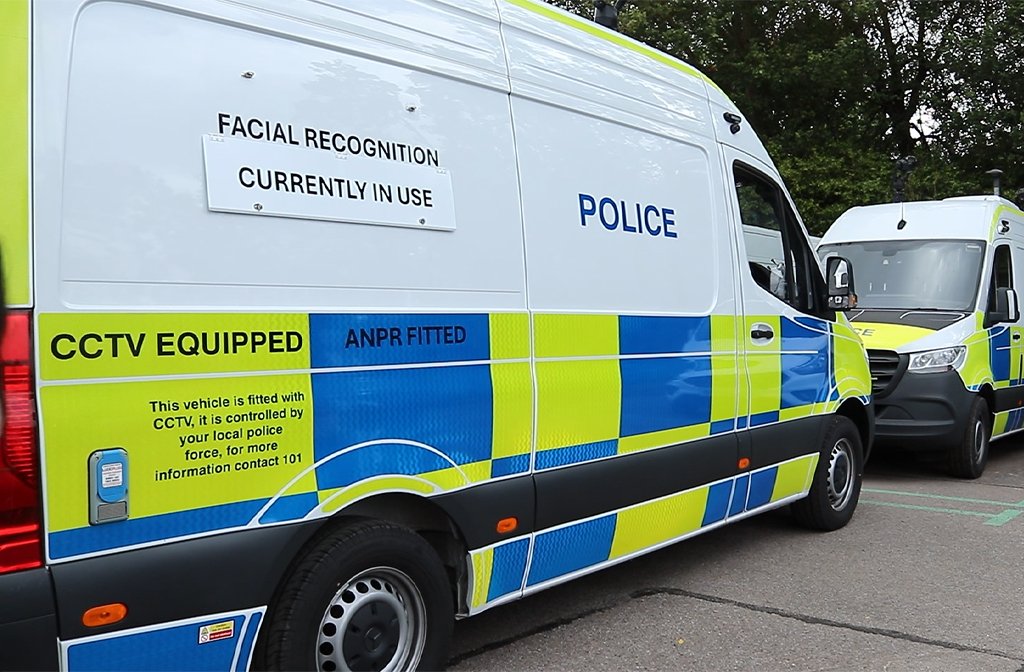
Bedfordshire regularly deploys Live Facial Recognition (LFR). The results are impressive: to date, there have been no false matches, and 23 arrests have been made.
There have also been no formal public complaints about the use of LFR in our town centres. Its use will be rolled out further, including at this year’s Bedford River Festival.
AI is also used in safeguarding, where it enables teams to scan intelligence and public referrals to identify both victims and potential victims of child abuse and domestic violence. AI-powered capabilities increase the speed and accuracy with which safeguarding decisions are made.
Work is underway to introduce AI into safeguarding in a joint initiative with Bedford Borough Council.
AI capability is also deployed in core support and back-office functions such as bringing HR, scheduling and workforce data into a single platform to improve resource allocation and enhance decision-making.
Currently, AI is used to enable police officers and police staff to undertake their duties more effectively. They still make professional decisions and judgments. This is not about replacing professional decision-making, which is especially important to understand.
It should offer reassurance to the public who may be concerned about ‘robotic policing’ or similar concepts.
As Police and Crime Commissioner, I support the use of AI. However, I always want to be reassured that it is being used effectively and ethically.
I am the joint national portfolio lead for the Association of Police and Crime Commissioners on the use and ethics of AI.
I sit on the Steering Group for the development of the new National Centre for AI in Policing – Police.AI.
Ethical use
Police.AI is being set up by the Home Secretary and the National Police Chiefs’ Council to coordinate and drive the effective and ethical use of AI across the forty-three police services in England and Wales.
These roles, as well as my membership of the Home Office Data Reform Board, provide me with insights to support and, when necessary, challenge the Bedfordshire approach to AI.
In reality, I also draw on the Bedfordshire experience when participating in these national boards.
I have introduced a memorandum of understanding with the Chief Constable on the use of LFR, with us agreeing strategic applications of the capability whilst he retains operational independence. I scrutinise the data from the use of LFR and any public feedback.
I have established an independent AI Ethics Advisory Panel for Bedfordshire to advise me on the application of these technologies and any ethical considerations. Recruitment for this panel is now completed, and a chair has been appointed, so it will begin its important work very soon.
The police themselves are committed to the highest ethical standards and to compliance with the law and national guidance.
The AI Ethics Advisory Panel I have established will provide independent oversight, guidance and ethical scrutiny of the use and deployment of AI technologies within policing.
The panel will assess AI applications and advise me on whether they are ethical and in the public interest, and advise me accordingly.
The advisory panel will undertake community scrutiny of the use of AI, including LFR. The panel will not interfere with or direct operational policing.
In turn, I hold the Chief Constable to account for his application of AI.
As part of the wider police reform agenda, the government is committed to greater use of AI in policing. It is encouraging and reassuring to know that Bedfordshire is leading on this critical modernisation of policing to ensure that our county is safer.
This is a monthly guest column provided by
elected Police and Crime Commissioner, John Tizard (Labour).
It is published unedited and does
not reflect the views of the Bedford Independent.









