

One of the hallmarks that separates truly democratic states from authoritarian regimes is the independence of their institutions. Among the most critical of these is policing.
For generations, we in Britain have benefited from living in a society where the police operate independently rather than under political instruction.

This independence underpins the British model of policing by consent, the trust that the public grants the police to act on their behalf, not in the name of any government or party.
The contrast with authoritarian systems is stark. In many such regimes, police act as enforcers of political will.
Their legitimacy comes not from public confidence but from power, fear and control. Policing ceases to be about public service and becomes an instrument of government power. That is not, and must never be, the British way.
Here, Chief Constables have operational independence. They make professional judgments about tactics and operations free from political direction. They are nevertheless accountable to the law, to their Police and Crime Commissioner (PCC), and ultimately to the public.
Balance
That balance between independence and accountability defines democratic policing. It means our police can act firmly but fairly, serving justice rather than politics.
The importance of the police being impartial—and being seen to be impartial, cannot be overstated. Public trust is fragile. When the public perceives political interference or bias, confidence in policing as an institution quickly erodes.
Once lost, that trust is extremely hard to rebuild. The entire philosophy of policing by consent relies on it.
At the national level, Parliament and ministers set the laws that the police must uphold and allocate funding to forces across England and Wales. Locally, PCCs set policing priorities, determine budgets, and hold chief constables to account on behalf of the public.
These are legitimate and necessary political functions—but they are entirely distinct from day-to-day operational decisions.
This essential separation is clearly defined in the Policing Protocol Order 2023, which sets out the relationships between the Home Secretary, PCCs, and Chief Constables.
It reaffirms that while police services are accountable to elected officials, operational control must remain entirely separate from political authority. Accountability must never become interference.
A PCC or Home Secretary may ask questions and conduct scrutiny after an operation, indeed, they must if they are to ensure transparency and uphold public confidence—but they must not direct or influence what the police do beforehand.
The timing of the intervention is crucial. Pre-emptive involvement in live operational matters risks compromising both the safety and the impartiality of policing.
While the 2023 Protocol could benefit from review and refinement to reflect modern realities, the principle of operational independence should be beyond question. It is at the core of democratic policing and must be respected by politicians at every level.
History shows, unfortunately, that this principle has not always been upheld. There have been moments, even at the highest levels of government, when ministers have appeared to lean towards political use of policing powers.
When Suella Braverman was Home Secretary, she sought to involve herself in operational decisions. This raised fundamental constitutional questions.
The human rights barrister Adam Wagner has argued that the separation between the executive and the police is as integral to British democracy as that between the executive and the judiciary.
He is right. Just as ministers cannot direct judges, they should not direct constables. Operational policing decisions must rest solely with those professionally trained and legally empowered to make them.
The same logic applies locally between PCCs and Chief Constables. PCCs are there to represent the public’s voice, to challenge, support, and hold to account—not to instruct, command, or interfere. As PCC, I cannot and must not involve myself in day-to-day police operations.
Political drift
Most responsible PCCs understand and respect this balance, but the risk of political drift is real.

Recent rhetoric from some political movements has made that danger clear. Reform UK, which aspires to form a government, has publicly stated that it would take direct operational control of the police if elected.
This is not a small administrative proposal; it represents a fundamental constitutional shift towards authoritarianism.
Similarly, there have been local examples of business figures believing they can fund or direct private “security” groups to take on policing roles, as if public safety were a commercial activity. These are deeply misguided and worrying notions.
The British policing model has evolved over nearly two centuries on clear principles laid down by the founder of the modern police service, Robert Peel, in 1829.
These principles remain as relevant to Bedfordshire today as they were in Victorian London. They remind us that policing is a public service rooted in the community, not an arm of government power.
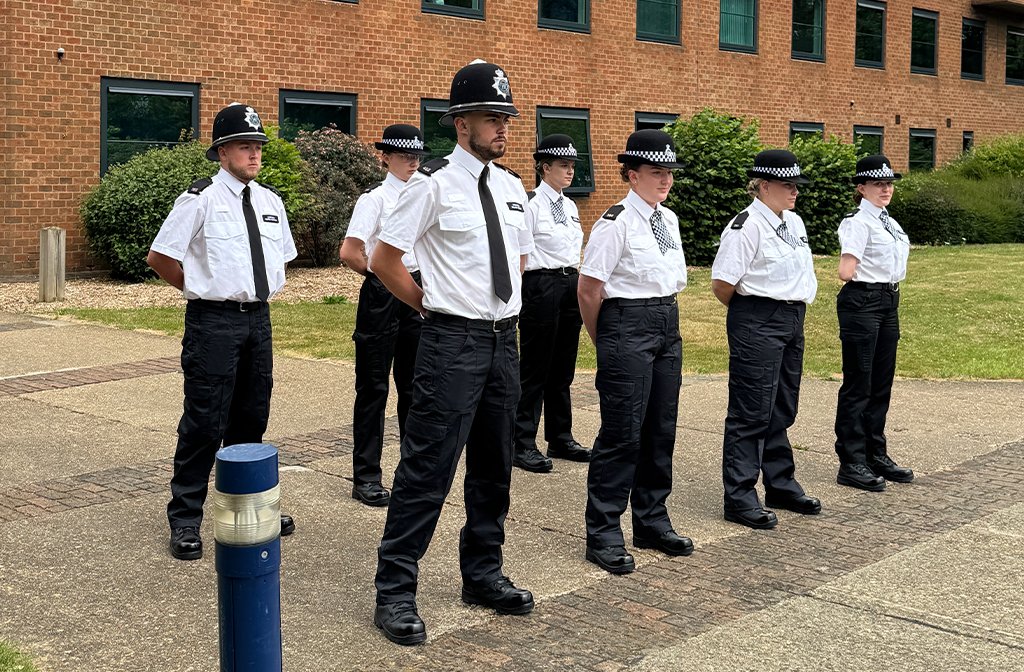
These principles remain the moral compass for policing. In Bedfordshire, our local officers uphold these values daily. They deserve respect, support, and—crucially—freedom from political manipulation.
Political control or erosion of operational independence would damage community relationships, weaken public trust, and undermine the very idea of policing by consent.
The independence of the police is not an administrative convenience; it is a safeguard of democracy. We must never take it for granted, and we must remain resolute in rejecting those who would erode it.
This is a monthly guest column provided by
elected Police and Crime Commissioner, John Tizard (Labour).
It is published unedited and does
not reflect the views of the Bedford Independent.









