by Daniel Fattorini
To celebrate Love Your Local Market week, I took a stroll around Bedford Market and picked up some great ingredients to showcase our local produce and traders. Each dish can be served separately or together as part of a fresh spring/summer lunch.
Tomato, pine nut and basil bruschetta
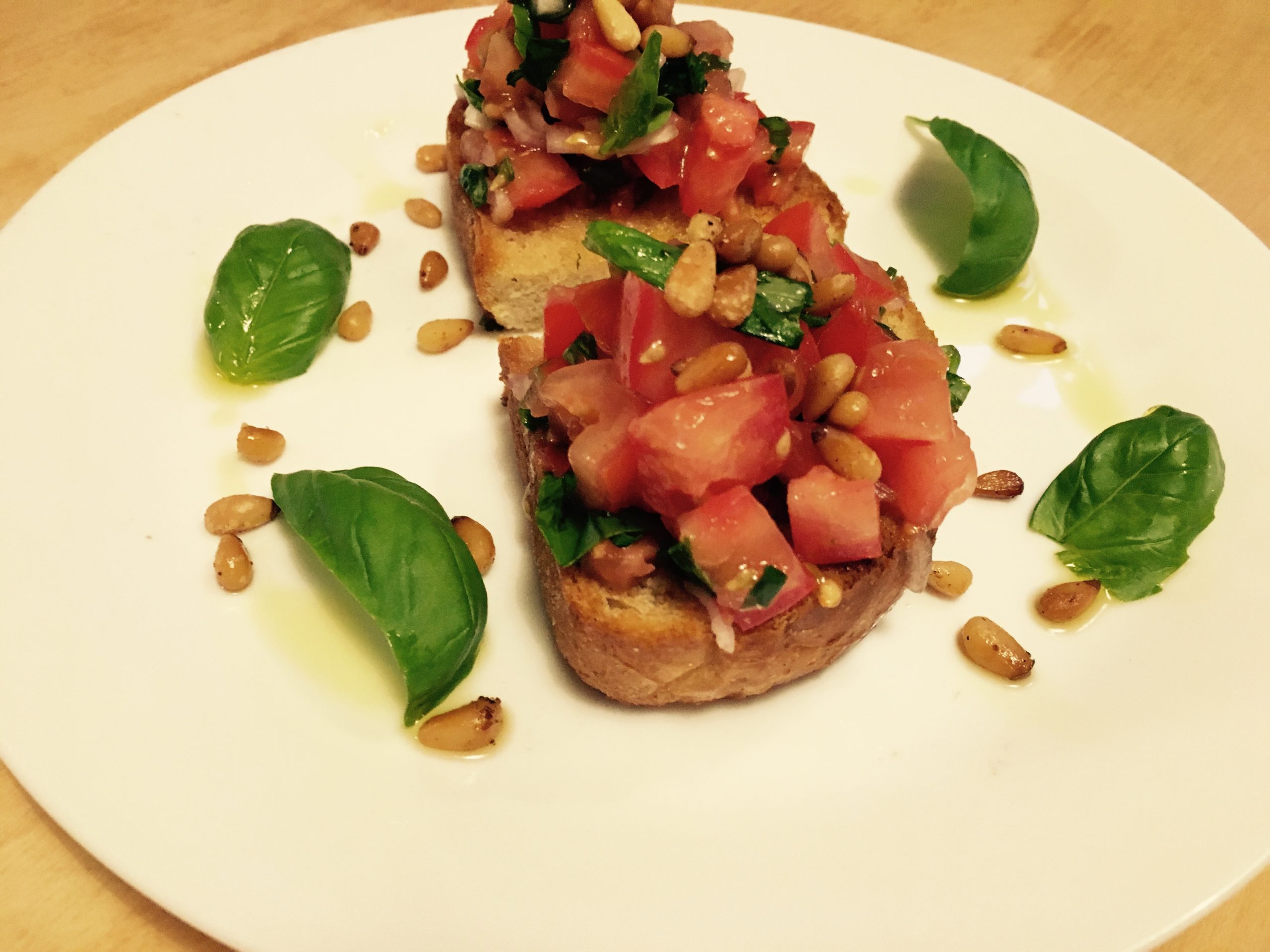
One of my favourite stalls on Bedford Market is the Paneficio Chirico bread stand. Handmade, fresh, crusty bread is a staple but nonetheless a treat. A characteristic of great fresh bread is that it doesn’t have the shelf-life of a packaged loaf. You needn’t throw it away though, as with a little effort you can bring it back to something truly special.
Ingredients:
Half a loaf of crusty white bread, stale but not mouldy
Six fresh vine tomatoes
Three cloves of garlic
Two tablespoons of butter
Extra virgin olive oil
Juice of half a lemon
One shallot (optional)
Two heaped tablespoon of pine nuts
Salt and pepper to taste
To make our bruschetta we need to toast them in a slightly different way than you would normally. To do this, crush the cloves of garlic with the side of a knife and put them along with the butter and two tablespoons of olive oil into a baking tray in an oven at 180 degrees Celsius.
Meanwhile slice the bread, about 2 cm thick then halve each slice. Aim to have between eight and ten half slices or enough to fill your baking tray. After 8 minutes, the garlic, butter and oil mixture should be sizzling in the tray. Remove the tray and put the bread in, first coating one side then turning each slice over so that all sides have a coating in the mixture. If you find there’s not quite enough oil to coat all of the slices you can add a little more olive oil to bulk it up. Return to the oven and cook for ten minutes until the breads are golden.
While the bread is toasting, chop the tomatoes into cubes about 1cm thick and put into a mixing bowl. If adding shallot, chop this very finely and add to the mix. Chop the basil; I do this by roughly shredding with the blunt side of a kitchen knife. This draws out more of the flavour. Add the lemon juice and two tablespoons of olive oil to the mixture, season and mix well.
Remove the bread from the oven. It should be golden and crispy. If not, return to the oven for a few more minutes. Put the bread on some kitchen towel and allow to cool. Meanwhile in the same tray you cooked the bread put the pine nuts and pop into the oven for just two minutes to toast them. Be careful as they can quickly burn.
Assemble the bruschetta by loading the tomato mixture on top being careful to give a generous helping but not overloading. Complete by putting a sprinkle of the pine nuts on top and serve immediately.
Jersey royal potato and fresh mayonnaise salad
A simple, fresh potato salad is a well-known crowd pleaser but rather than toss any old spuds together with some Hellmann’s why not make it a thing of beauty? We are right in the heart of the Jersey Royal season and these stunning vegetables don’t need too much to add to their rich nutty flavour. Available from our many fruit and veg market retailers, you can pick the perfect sized ones too. Our intention is simply to coat them with some moisture, seasoning and herbal notes to make them sing. I always use fresh, good quality, local eggs for my own mayonnaise. If you don’t fancy using raw egg, you can also find pasteurised egg yolk for sale at some supermarkets if you want.
Ingredients:
1Kg Jersey Royal new potatoes, cleaned but not peeled
Half a cup of chopped mixed parsley, chives and tarragon
Two egg yolks
2 tbsp fine Dijon mustard
500ml of oil (Bedfordshire cold pressed rape seed oil or ground nut oil preferable)
2 tbsp white wine vinegar
Juice of half a lemon
Salt and pepper to taste
First boil the potatoes whole for about ten minutes. Use a skewer to test when they are done, they should still be firm but cooked. Remember that many things continue to cook after they are removed from the heat, so drain immediately before putting back in the pan with cold water, changing this regularly or even adding ice to chill rapidly. Once cold, chop the potatoes into smaller pieces where necessary to make each piece about 4-5 cm in size.
For the mayonnaise, you will need to whisk the mixture in a bowl. Ideally use an electric whisk but by hand is fine and will give your arms a good workout! As with any whisked mixture, ensure the bowl is perfectly clean before use. I prefer a metal bowl which I will rinse with boiling water to sterilise before patting dry with kitchen towel.
Start by whisking the egg yolks and mustard together for a few minutes until they become creamy and textured. You then need to start adding the oil gradually. It may be useful to have someone else help by pouring a slow stream of it into the whisked egg while you mix. After you have added about half of the oil, add the vinegar before gradually whisking in the remaining oil. Once the mixture has come together completely you can add salt and lemon juice to balance the seasoning and acidity to your own taste. You may even want to add more mustard for a bigger flavour.
Fresh mayonnaise is free from preservatives and so will develop a “skin” quicker than tinned. It’s therefore best to combine the final ingredients together less than an hour before serving. To do so, simply add the mayonnaise to the potatoes until they’ve got a nice coating without being drowned in it. You’ve probably made more mayonnaise than you need for the potatoes alone so just add enough to coat them and save the rest for something else. Toss in the herbs, folding them over evenly and season to taste. The remaining mayonnaise can be kept in a sterile jam jar or food container for a few days. Place a piece of greaseproof paper over the top to help keep it fresh.
Salmon and asparagus “open sandwich”
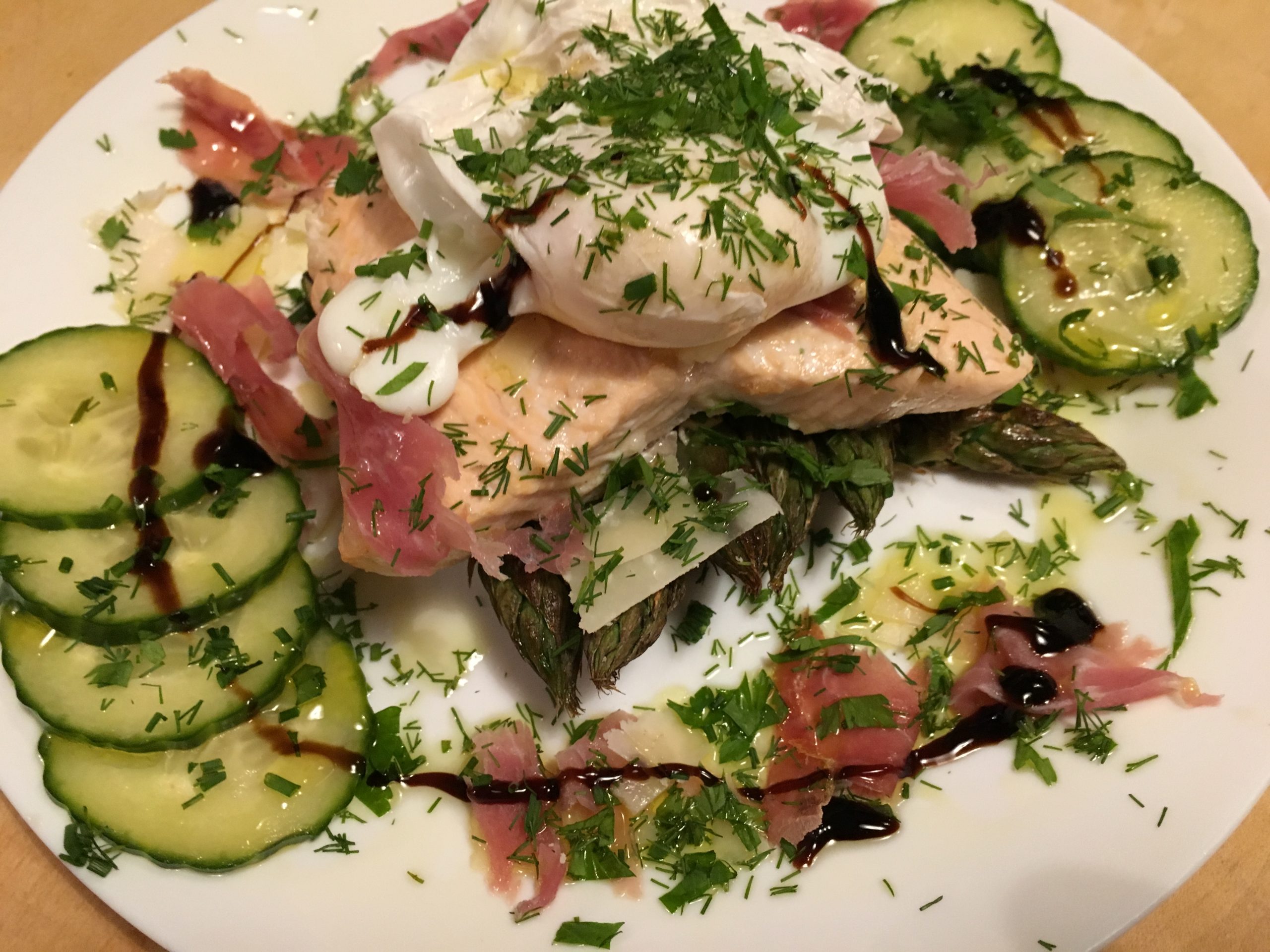
We’re coming towards the end of asparagus season but having been a relatively cool start to the year, there’s still some great quality stuff around. Some things are obvious partners with asparagus; I’ve chosen salmon from the fresh fish stall and some local free range eggs to go with it. This dish takes a little care to prepare but the final result should be something to truly impress your guests and can either be served as an individual dish or a tapas style sharing plate. All of the cooking takes place pretty much simultaneously with this dish so it pays to be prepared.
Ingredients:
Twelve thick asparagus spears
Large salmon fillet
Local fresh free range eggs
One piece of good quality parmesan
Two or three slices of Parma ham
A handful of chopped chives, parsley and dill
Olive oil
Balsamic vinegar
White wine vinegar
Cucumber
Salt and pepper
Wooden kebab sticks
Start by making a simple cucumber pickle. Add 100ml of the white wine vinegar to 200ml of water and add about ten fine slices of cucumber into the solution to pickle for a while.
Split the asparagus into two sets of six. Line the tips of the spears together and chop off the bases aiming to create a perfect square, approximately the same for both sets. With the spears lined up, insert a kebab stick towards each end in order to hold them together in a frame.
Prepare a steamer with plenty of boiling water and steam the salmon for about ten minutes until cooked but not overdone. You can check how well it’s done by gently parting the flakes in the thickest part of the meat and seeing if there’s any translucent meat left.
Meanwhile, on a hot griddle, brush a little oil over before searing the asparagus, ideally on a diagonal pattern to maximise the dramatic effect. Cook each set of spears on both sides until they feel tender but still with some bite.
In a pan of simmering water, poach an egg carefully allowing a creamy, runny yolk.
To serve, assemble the asparagus spear sets on top of each other but perpendicular creating a lattice. Remove the wooden kebab sticks carefully. Shave a few flakes of parmesan and roughly tear some of the Parma ham over the top and around the plate. Place the fillet of salmon on top of the asparagus then the egg on that before finishing with some of the chopped herbs, salt, pepper and a dash of both olive oil and balsamic vinegar. Lay a few slices of the pickled cucumber around the sides of the plate and serve.