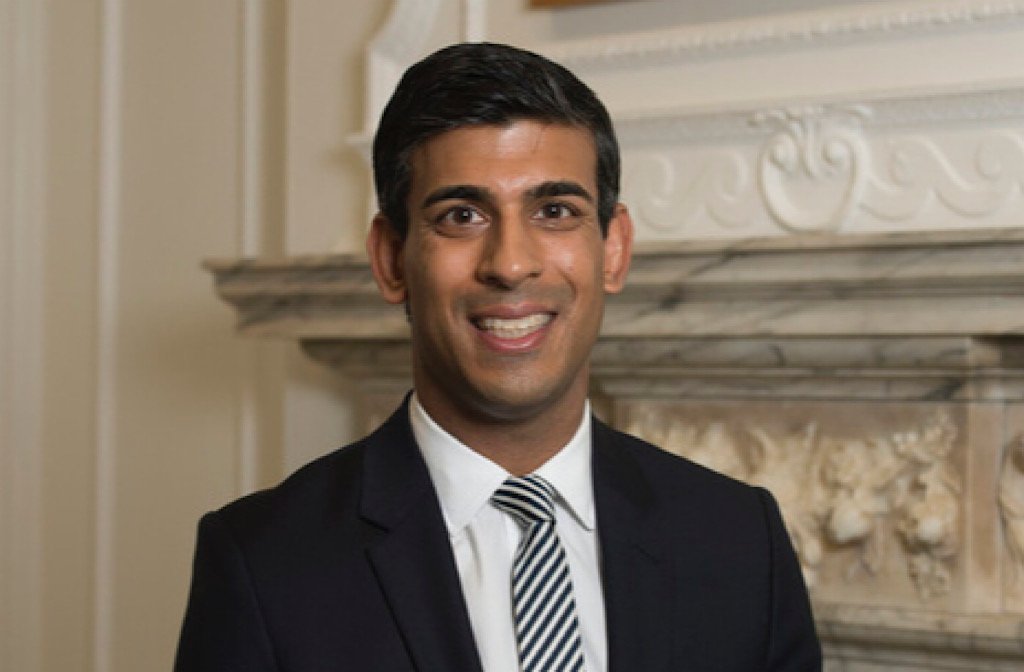
The Chancellor of the Exchequer’s financial response to the coronavirus pandemic leaves the poorest to shoulder most economic risk and will widen inequality across UK, according to think tank, the Institute for Public Policy Reform (IPPR).
According to IPPR analysis, almost half of the cost of the government’s newly-extended Covid-19 furlough scheme will be spent on rent and debt repayments, which they say amounts to ‘an implicit bail-out of landlords and banks’.
Without further action the effect of the Covid-19 lockdown will be to widen inequality across the UK, says the paper published by the think tank yesterday (Wednesday).
It follows the government’s announcement on Tuesday that the ‘furlough’ scheme is being extended by up to four months.
The paper’s authors found that families in upper pay brackets who are still able to work are likely to be spending less and saving more, while low-income families on furlough will be gradually racking up further debt.
The paper, by economists Christine Berry, Laurie Macfarlane and Shreya Nanda, calculates that:
- Up to 45 per cent of the net cost of the furlough scheme will be spent on rent and debt repayments to landlords, banks and other lenders, amounting to £10 billion under a three-month shutdown, and £21 billion if the shutdown and furlough scheme continued for six months
- Households in the second highest income decile may be saving an extra £189 per week on average, where earners are able to continue working from home
- Those in the second lowest income decile may be adding an average £12 a week to their existing debts, if earners are furloughed on 80 per cent of salary
The economists analysed a range of publicly available data, including from the ONS.

Better-off households will make significant savings from curtailed “discretionary” spending on holidays, hotels, restaurants and cultural and leisure activities, but as poorer household spend less on these they have little scope to make such savings.
Bills for food, household utilities and other essentials are largely unchanged, as are – for most families – the costs of rent, mortgages and other repayments. Even those who take advantage of rent or repayment “holidays” will eventually have to pay off their debts, with additional interest.
As a result, say the report’s authors, landlords and lenders are effectively protected from the economic impact of the virus, while poorer households bear the brunt.
They also warn that if families emerge from the crisis less able to spend because their debts are higher, it will take longer for the economy to recover.
“Potentially, there will be 1,000 people in Bedford who were going to be evicted before lockdown, or will face eviction once lockdown is lifted as their financial situation changes,” said Mike Hyden of JustUs the homeless advocacy agency.
“The government has had a good start at helping the financially most vulnerable, but [the current situation] will put a lot of people at risk of homelessness.”
The report also criticises the support system for businesses, including interest rates charged on crisis loans.
In response to the IPPR report, the MP for Bedford and Kempston, Mohammad Yasin said, “This report shows that from being the great leveller, Covid will and is in fact increasing existing inequalities.
“Earlier this week, we discovered people in low-paid, manual jobs face a much greater risk of dying from coronavirus than higher-paid, white-collar workers.
“Once again, those least able to weather the crisis are taking on debt to protect the incomes of those most able to weather it.
“We must not repeat the mistakes of the banking crisis by asking those least able to pay to make the greatest sacrifices. Another decade of public service austerity cannot be the answer to the Covid financial crisis.
“The economic risks and costs of the shutdown should be shared fairly across society.”
Carys Roberts, IPPR’s Executive Director, said,“It’s the right decision to extend the job retention scheme, which is so vital to lives and livelihoods across the country. But it’s also important to understand who is really being protected most.
“IPPR’s research finds that while millions of ordinary people are seeing a hit to their incomes, the government is under-writing the income of banks and landlords without any obligation to take a similar hit. That amounts to an implicit bailout.”
The Bedford Indepdendent extended the deadline of this article to allow Richard Fuller MP time to respond, but he did not provide a comment.