If it wasn’t for the hospital bed, you’d be forgiven for thinking this was a cosy room in someone’s house. Soft furnishings and butterfly themed art adorn the walls, but the air is thick with emotion.
I’m standing in the ‘Butterfly Room’, Bedford Hospital’s bereavement room, a dedicated delivery suite for families and a new addition to Cygnet Wing, following a change of leadership team this year.
The room is beautiful, but the grief is palpable, it’s as if the memory of too much trauma has etched itself into the walls, but the purpose of the room is ultimately positive.
It’s a place for people to grieve and receive the care and support they need in a part of the ward away from where others may be having a very different experience.
CQC Reports
In 2018 and November 2020 Bedford maternity unit received two negative reports from the Quality Care Commission (CQC) and was graded inadequate.
Since then, there’s been a change in leadership.
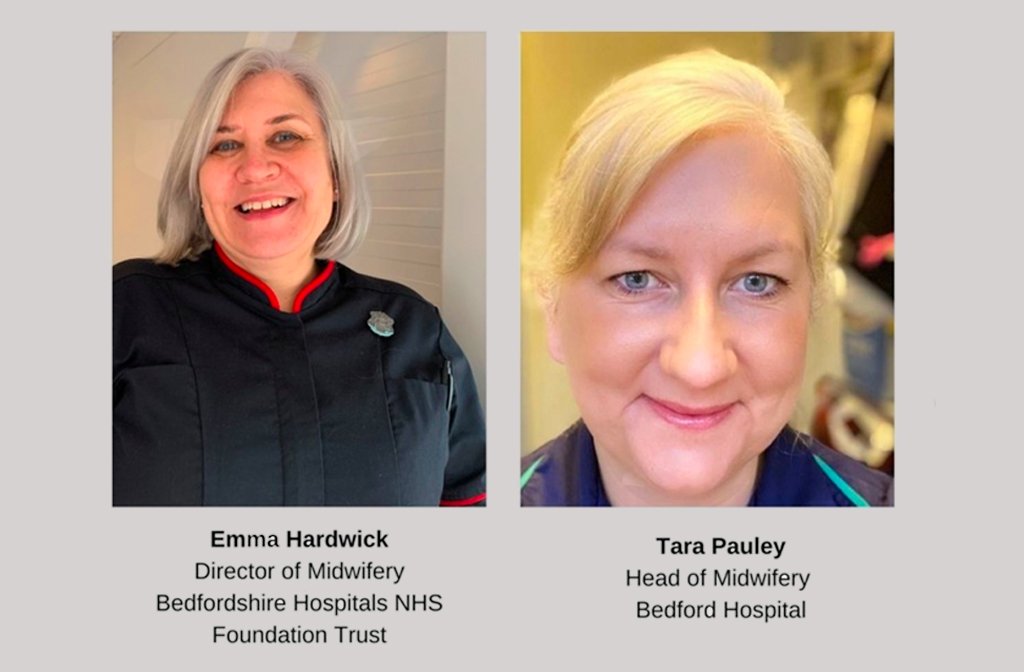
Emma Hardwick has been appointed as director of midwifery, with Tara Pauley recruited as head of midwifery.
Read: After damning CQC report, Bedford Hospital appoints new Director and Head of Midwifery
Sarah Gates has also been appointed lead bereavement midwife, a position they’ve not previously had.
In June 2021, a surprise CQC inspection upgraded the unit to ‘improving’.
Read: Maternity Services improve at Bedford Hospital since last inspection was ‘inadequate’
The last CQC report and subsequent article by the Bedford Independent prompted multiple women to come forward and share positive and negative experiences of Cygnet Wing.
Read: Grieving mother left feeling “bottom of the barrel” by Bedford Maternity unit after miscarriage
Midwives were frequently praised for their dedication and hard work in incredibly demanding circumstances.
However, negative experiences outweighed the positives and several women shared truly harrowing stories.
Some said their experiences have put them off wanting to get pregnant again. Many added they’d never set foot in Bedford Hospital again, even in a dire emergency.
Rachel’s* story
“If I hadn’t come in that morning, I wouldn’t have woken up Saturday. I was less than 24 hours from being dead.”
Rachel suffered a ruptured ectopic pregnancy in 2017. It was missed even though she presented at A&E with heavy bleeding and severe pain. Instead, she said it was written off as a urine infection.
Rachel was physically unable to stand but was not given a scan. She says she was told, ‘we’ve got no equipment here to scan you at this time.’
Rachel remembers thinking, ‘I’m in a hospital, of course, you can scan me.’
Instead, she was sent home with antibiotics and told a scan would be arranged for a few days’ time.
By the time she had the scan, four days later, she was still bleeding heavily and felt like her stomach had been stamped on.
Rachel said the pain, “would come over in a massive wave and knock me to the floor, last about ten minutes and go off again. An hour later it would do it again.”
She could also feel a horrible ‘sloshing’ in her stomach.
When she arrived at Cygnet Wing, the morning of her scan, she was met by the nurse she credits with saving her life.
Expecting a routine early pregnancy scan, the nurse “stopped dead” when Rachel told her the pain and bleeding had been constant all week.
No record had been made of pain and bleeding. The doctor had just written ‘early pregnancy scan’ on her notes.
The nurse allegedly said Rachel shouldn’t have been sent home on Monday with pain and bleeding. At worst she should have been seen on Tuesday for a scan.
Rachel said: “She put the scanner on me, her face drained of colour and she said, ‘this girl needs theatre now’. I was full of blood.”
She was also tachycardic, meaning her heart rate was too fast, signifying possible poor blood supply to the heart.
Rachel had suffered a ruptured ectopic pregnancy and lost a litre of blood, which she says is what the sloshing had been.
Worse still, when the doctor sent her home, she’d developed peritonitis from a subsequent infection.
On the way down to the theatre, Rachel was told she ‘was less than 24 hours from being dead’.
She said: “I had a whole family relying on me and that [doctor] had sent me home with a box of anti-biotics.
“They [Bedford Hospital] said to me if he’d have checked me on the Monday, or at worst kept me in and checked me on the Tuesday, they’d have found it.”
An internal investigation was conducted after she complained to the hospital. The subsequent report has been seen by the Bedford Independent.
Rachel described the nurse who scanned her as, “amazing from start to finish. She’s a credit to that hospital.”
Katherine’s* story
Katherine suffered a miscarriage in 2012. She was 11 weeks pregnant.
Despite heavily suspecting a miscarriage, she was sent home from Bedford Hospital, because she was not at the 12-week mark.
Katherine said she was denied pain relief because she ‘might still be pregnant.’ However, she was not scanned.
Instead, she went through the miscarriage alone, terrified in her bathtub. She said: “It was the worst night of my life and I had no support.”
She described it as “barbaric” and “medieval”.
“I was in so much pain I took a load of pain killers I had at home, and I went through the miscarriage by myself, sat in a hot bath pushing, pushing and pushing until something burst and that was that.
“It was the worst night of my life and I had no support. It was horrendous.
“I just did it on my own. I felt extremely unimportant by the time I got back from Bedford [hospital]. They treated me like it was nothing so that’s the way I went with it. I’m nothing, this is nothing, I can do this. Let’s just get through this.”
Having no information from the hospital and not knowing what to expect was “terrifying”.
“I didn’t know the pain would be so intense. I had no idea I’d have to pass things. I had no idea how long it would last.”
It was only afterwards Katherine realised what a dangerous position she had been in.
“I had no idea, if something happened, ‘this is bad, and you should ring an ambulance’. If they’re going to send you home, they should send you home with some information. Just don’t send people home alone.”
The one positive Katherine drew from this were the “lovely” Midwives.
She said: “The Midwives will stick in my mind as being the kindest people during this episode.” They visited her the morning after her miscarriage.
She said: “They were pretty shocked at what had happened.”
Common complaints
Rachel and Katherine’s experiences were not isolated.
The Bedford Independent heard from several other women who detailed traumatic experiences spanning nine years from 2012 – 2021.
- Being put in the maternity ward surrounded by new-borns when miscarrying
- Being left alone for long periods of time in rooms with little comfort, little contact from staff and without being offered food and water
- Staff not explaining what was happening to them
- Being denied scans or being told the hospital didn’t have the equipment to scan them
- Women developing sometimes life-threatening infections due to the handling of miscarriage
- Contention around early pregnancy scans – not being scanned before 12 weeks even if miscarriage is suspected and in extraneous circumstances
- Being sent home to miscarry alone
- No counselling or follow up support
- Being unable to walk after procedures but expected to collect their own food on the ward
- Generally, not feeling listened to and a lack of compassion
- Symptoms being dismissed or ignored
- the need for staff training
- The need for a dedicated early pregnancy unit / dedicated team to support miscarriage
The hospital’s response
All these concerns were put to the new Midwifery team by the Bedford Independent earlier this month to find out what changes have been made since the last CQC report.
Tara Pauley the new head of midwifery is calm, caring and passionate about getting things right for families.
She talked about creating a “positive practise environment” and listened with empathy to the complaints I relayed to her.
She said: “I think any person coming through that journey and having those experiences, there’s always learning and at the end of the day, we’re motivated to take those experiences and learn from them and strive to improve.
“Everybody wants to deliver the best care that they absolutely can.”
Tara acknowledged the feedback from women and said that while people had commented on “great care and really good feedback”, they also raised care issues they felt was “substandard or they felt people perhaps didn’t have the right level of training.”
She acknowledged the need for more training across maternity and gynaecology services was raised by families and said this is something they have done.
She noted women had sometimes experienced difficulties where multiple departments were part of the process.
For example, women often go to A&E with symptoms and are later sent to gynaecology teams. In some cases, there wasn’t always a smooth transition of communication between these departments.
Appointment of specialist roles
A number of new roles have been appointed at Bedford Hospital, including:
- Audit midwife
- Bereavement midwife
- Foetal monitoring midwife
- Patient experience midwife
- Two clinical tutor roles
There has also been growth within the safety and governance team.
 The patient experience midwife will work between Bedford and the Luton & Dunstable Hospital (L&D). Tara described this as an important role because it will triangulate learning with complaints to really improve things.
She said: “What’s really challenging for a lot of the NHS services is our resource and availability and so having somebody dedicated who can lead some of that moving forward is really important.
“When you’ve not had that in an organisation before it can only serve to improve things for people moving forward.”
The clinical tutor roles are split between the University of Bedford and will accelerate staff training.
The unit are not yet at 100% staffing levels, but Tara described ‘a healthy pipeline of staff that are coming through.’ They have 11 newly qualified Midwife roles plus additional Midwife roles on the horizon.
Further responses
On a lack of understanding and compassion
Multiple women felt they had experienced a lack of compassion, during past experiences, and that they hadn’t been listened to by staff.
Putting this to Tara, she raised an interesting point that’s easy to overlook. She said: “We’re predominantly a female workforce. We’ve actually got staff that have undergone those experiences as well. It’s something that’s often not talked about.”
With one in four women miscarrying, it’s likely a large proportion of Cygnet Wing staff will have gone through or be going through miscarriage themselves.
They will then be in a position where they are coming into work and helping other women through the same thing.
Tara said: “When you’ve had that personal experience, very often it does motivate you to try and make it as positive as you can for anyone else.”
This is also where Sarah Gates’ new role as bereavement lead comes in.
Appointment of bereavement lead
Many women spoke of the lack of counselling, support or just having a nurse to talk to.
Katherine asked,”if miscarriage is so common, why isn’t there a designated team at every hospital?”
Although there wasn’t a dedicated team previously, Sarah was part of a group of midwives who set up a bereavement team independently.
These midwives were passionate about providing bereavement care, but as there was no officially allocated time for them to perform their duties. It is possible that’s why some women didn’t have contact with them.
Some of the complaints may also have been experienced before the team was formed.
Sarah said the creation of a bereavement midwife role is “brilliant because it means there’s a point of contact for staff and families, which makes a massive difference.
“When families go home, they don’t have anybody to contact specifically, so it makes a difference.”
The role also acts as a point of contact for staff and will make sure they have the required training.
Sarah said: “It’s so important that we get this right because families don’t go home with a baby, and we need to make sure we’re getting that care right.”
She explained, “having this role in place, means you can follow a family through their whole pathway of care.
“So, you’d meet them ideally at the first point when they’re coming in to have their babies and then follow them up afterwards in the post-natal period, making sure you’re present at their follow-up appointments and making sure they’ve got the support they need.”
Regarding follow on care or counselling, Tara said this is where staff need to be innovative in signposting families to the right organisations.
Sarah will be working closely with charities like SANDS and CHUMS who have specialist teams to help support people through these experiences.
The unit will also be able to refer people to Bedford-based CHUMS for sessions with trained counsellors.
On women not feeling listened to
Tara said: “We have to listen to women and when they’re saying they’re in pain or that it’s ongoing, or anything about their bleeding.”
She highlighted the need for the entire multidisciplinary team to be mindful of miscarriage symptoms.
Previously a poster campaign was set up through non-gynaecological areas of the hospital, alerting staff to symptoms of ectopic pregnancy and ruptured ectopic.
Tara explained this need for cross-sector understanding is because a patient may present with symptoms in a department where that is not that person’s area of specialism.
For example, a woman with a ruptured ectopic pregnancy may come to A&E and that won’t be that team’s area of expertise.
Being put in the maternity ward with new-borns when experiencing baby loss
Multiple women couldn’t understand why they were put on the maternity ward, surrounded by happy mums with newborns, when they had lost their own babies.
They found this deeply upsetting and insensitive. One woman described blocking out babies cries with her earphones.
Tara explained there are two separate wards, gynaecological and maternity, but that this is an area where they are quite challenged with what structural changes can be made to the building.
Reportedly, the organisation has tried to relocate departments, but it has been quite a challenge.
There is now a separate access route between both wards so that women who are miscarrying don’t have to walk through maternity to get to gynaecological.
Tara said the team does work hard at utilising that access route and the doors are generally closed to separate both areas.
She said women might not have used this route if their experiences took place some time ago.
Contention around early pregnancy scans – not being scanned before 12 weeks even if miscarriage is suspected
Tara said there’s a need to look at this case by case. Again, difficulties can arise depending on whether women present via A&E, primary care or GP services.
She feels things are harder for women today because improvements in testing mean they know they’re pregnant far earlier, even before knowing whether the pregnancy is viable.
She sympathised with women’s frustrations around wanting to know what was happening.
She said: “What’s really difficult for most early pregnancy assessment units and not specifically Bedford is trying to provide a scan in as timely a way as possible.”
Additionally, there is not always a lot that can be done during certain gestation stages.
Tara said the priority for dealing with a woman experiencing early pregnancy bleeding is understanding how much she’s bleeding and ensuring it isn’t excessive.
Moving forward
With her compassion and desire to deliver outstanding care, Tara Pauley seems like the right person to lead changes at the unit.
She said: “I can’t praise the team enough. Day after day I’m so proud when I’m with the team out and about and seeing how hard everybody works and how much everybody puts in.
“It’s that passion, you’ve got individuals who don’t come for the bonuses. They come here because they want to make a difference and they come here because they care.”
“They’ll often end the day thinking, ‘did I do everything I could?’
“There is always an opportunity to make everybody’s experience and journey better. That’s what we all strive for, wherever we’re working in the NHS.
“It’s not about ‘good enough, it’s always about trying to be the best that they can.”
*Names have been changed to protect anonymity