BedsGOVET, the local river quality testing charity, set up to monitor water quality in Bedford Borough through the Don’t Lose the Ouse campaign, has called fines aimed at water companies who haven’t reached improvement targets “meaningless”.
Ofwat announced the fines yesterday, after not a single water company in England or Wales had done enough to repair leaks and reduce sewage spillages into waterways, missing improvement targets.

Water companies previously committed to reducing pollution incidents by 30%, but there has only been a 2% reduction.
The fines, totalling £158m across water companies in England and Wales will go towards lowering customer bills next year.
But questions are being raised about the effectiveness of these fines and Ofwat as a regulator as this is the fourth year in a row that firms have had to refund customers in this way, but still haven’t managed to reduce sewage from entering our waterways.
Alan Horn, chair of BedsGOVET is not impressed.
“The fines that OFWAT impose on the water companies are meaningless,” he said. “Anglian Water has been ordered to pay back £158million to customers which is equivalent to less than £28 per household – it is an insult.
“The total debt levels of the English water companies have been allowed to grow to a level that is greater than the whole of the UK’s education budget at circa £75billion.
“When these companies were privatised the total level of debt was zero. The greater proportion of their debts has been to pay dividends to their shareholders at the expense of investing in infrastructure.”
Anglian Water “well below expectations”
The news comes as a Freedom of Information (FOI) request to the Environment Agency by the law firm Legal Expert, found that Anglian Water has recorded 65 serious water pollution incidents in the last five years – the second-highest figure in England and Wales.
The Environment Agency categorises water pollution incidents as serious if they fall into their two highest categories: major (category 1) or significant (category 2).
Serious incidents can include events that may cause fish to die, are potentially harmful to bathers or force a drinking water provider to temporarily stop abstracting water from a river.
Legal Expert’s FOI also revealed that issues with containment and sewage came out on top as the leading cause of serious pollution incidents.
An Environment Agency report, published in August this year, that looked into Anglia Water determined that its current performance remains “well below expectations” with a two out of four-star rating for the third year in a row.
The Environmental Performance Assessment (EPA) found that Anglian Water was responsible for 307 pollution incidents, 11 of which were serious, from its sewerage assets during 2023.
Read: Standing room only as Don’t Lose the Ouse campaign launched
Despite criticism of Ofwat’s fines, David Black, chief executive of Ofwat, has suggested water companies may face tougher action in the future, even going as far as to suggest that changes in the leadership at water companies are needed.
“This year’s performance report is stark evidence that money alone will not bring the sustained improvements that customers rightly expect.
“It is clear that companies need to change and that has to start with addressing issues of culture and leadership. Too often we hear that weather, third parties or external factors are blamed for shortcomings.
“Companies must implement actions now to improve performance, be more dynamic, agile and on the front foot of issues. And not wait until the government or regulators tell them to act.
“As we look towards the next price control, the challenge for water companies is to match the investment with the changes in company culture and performance that are essential to deliver lasting change,” he said.
Read: New funding will help increase River Great Ouse water quality tests
“Harmful to both humans and river life”
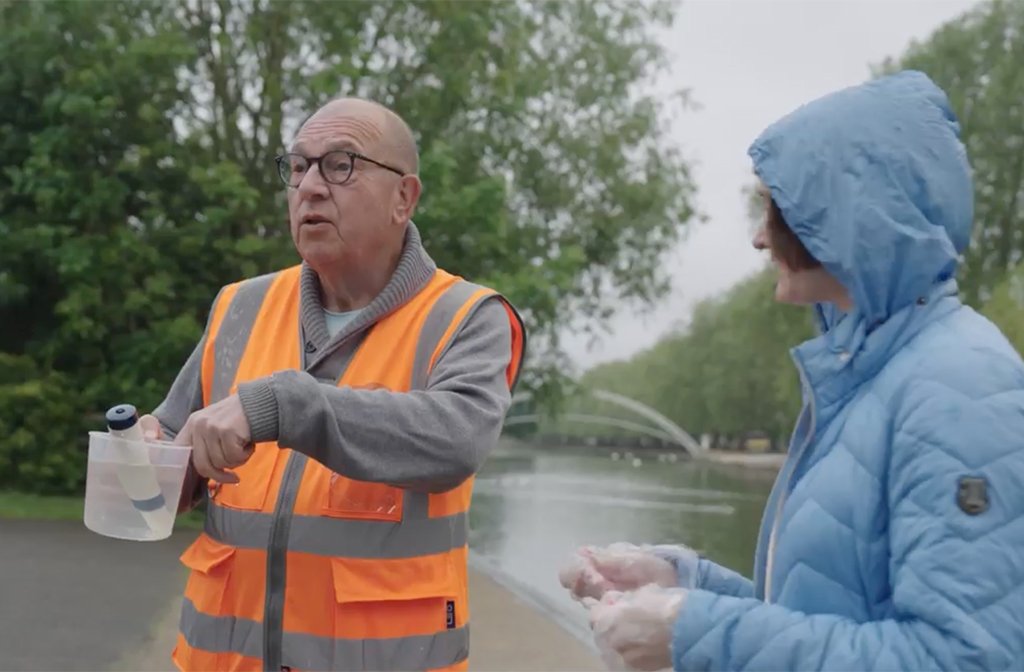
BedsGOVET’s Alan Horn believes this shows water companies don’t care about the fines.
“They [water companies] are unregulated monopolies who know that we, their customers, have no choice but to pay them for openly polluting our rivers.
“Our testing programme on the Great Ouse through Bedfordshire is about to be increased dramatically as levels of e-coli and nitrates are often at many times above so-called safety levels and are clearly potentially harmful to both humans and river life.”
Anglian Water has recognised they need to improve, but say they need more investment from the taxpayer through Ofwat to make things right.
An Anglian Water spokesperson said: “We know that our performance needs to improve, and with the arrival of our new CEO this summer, we are focussed on a dedicated programme to accelerate results.
“We now need to secure the necessary investment from Ofwat to deliver the right outcomes for customers and the environment.”
The first six months of 2023/24 saw Anglian Water achieve an 8.8% increase in revenue to £827.5 million and a 10.6% increase in operating profit to £255.9 million.
They added that direct comparison across the industry is difficult because Performance Commitment Levels (PCL) differ between companies.
“Our Performance Commitment Level (PCL) is the most challenging in the industry. Despite missing our last Ofwat target, we still outperformed all the companies that met their targets, reporting the lowest level of leakage in the industry.
“However because we missed our stretching target we are classed as ‘lagging’ and this contributes to our underperformance payments.
“For 2023/24, the balance of our performance across all these areas meant that we incur an underperformance payment of £38.1 million, which will ultimately be reflected in customer bills in for 2025/26,” said the spokesperson.