Bedfordshire’s Police and Crime Commissioner (PCC) has said he has “full confidence” in the county’s chief constable, chief executive, and chief financial officer, after concerns were raised over neighbourhood policing numbers and claims that the public had been “misled”.
At the Bedfordshire Police and Crime Panel meeting on Tuesday (1 April), a written question from a member of the public accused senior figures of failing to uphold policing standards and ethics.

The questions claimed, “Force executives misled the public since 2019, claiming it was 67 PCs… there should be 237 officers of all ranks in hubs.”
The question went on to challenge why Chief Constable Trevor Rodenhurst, chief executive Sharn Basra, and chief financial officer Phil Wells remained in post, adding that they had “failed to deliver promised PCs in hubs” and had potentially “breached the police code of ethics”.
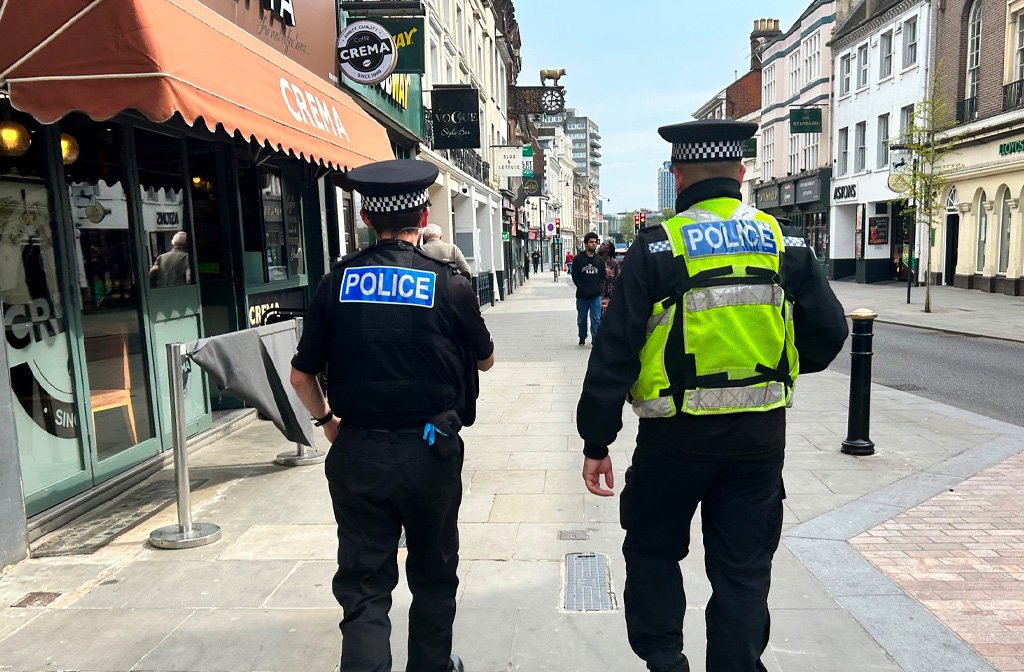
In response, PCC John Tizard defended the leadership team and clarified that as of 31 March 2025, there were 109 police officers and 38.39 PCSOs assigned to neighbourhood policing in line with the government’s national definition.
He confirmed that the force will add 20 more officers this year under the Neighbourhood Policing Guarantee, some of whom may be sergeants or inspectors, alongside eight additional PCSOs.
“I have full confidence in the chief constable, the chief executive of my office, and the chief financial officer,” said Mr Tizard.
“I don’t think I’m in a position to be looking for any of those officers to be standing aside. We as a police service, and as a police and crime commissioner’s office, are well served by all three.”
He added that policing isn’t only delivered by neighbourhood teams, noting that Bedfordshire Police has 1,486 officers and 1,219 staff serving all communities across the county.
The PCC also said that the government will be monitoring against the “national definition of neighbourhood policing” to ensure consistency between police services in England and Wales.
‘Working with limited powers’
Later in the meeting, the panel was asked whether it felt it had become more or less robust in scrutinising the PCC’s decisions and budget allocations.
Independent panel member Lee Melville said: “The panel tries very hard to hold the commissioner to account to the best of our ability and to the constraints we work with… the powers we have are quite challenging.”
Councillor Basit Mahmood (Luton Borough Council) said the panel had gone “over and above” in holding Mr Tizard to account, referencing scrutiny of his response to far-right unrest in Luton last summer and a line-by-line review of his first budget.
Panel chair Paul Downing added that only now, after a year in post, was the PCC in full control of his own plan, team and budget.
“The commissioner now has the chief constable he wanted, his selected chief executive, and his approved budget,” he said. “Now we can start drilling into detail.”
The PCC said he believed the panel had “succeeded” in providing scrutiny but recognised their powers were limited. He welcomed ongoing government reviews into police governance.
“Scrutiny should be a constructive, positive process,” he said. “It’s in everyone’s interest to get it right.”
Taken from reports provided by John Guinn
Local Democracy Reporter