It’s 1971. A group of footballers, including Bedford’s Jan Emms, are lacing up their boots to represent ‘Inglaterra’ in an “unofficial” Women’s World Cup, preparing for their opening game against Argentina after receiving a hero’s welcome from the people of Mexico.
Back home in England, Women’s football is banned and has been since 1921.
‘The Lost Lionesses’ tells the story of those who braved the ban, bucked the trend and travelled to the other side of the world to become pioneers of the sport watched by millions today.

The Place Theatre in Bedford is hosting a five-night run of ‘The Lost Lionesses’, a show that is gaining well-deserved plaudits after opening last year.
A six-strong cast, each with their own back story, tell the tale of those young women who just wanted to play football, albeit under the guise of the “British Independents”, for the use of the word ‘England’ would cause uproar from the stiff upper-lipped suits governing the game in London.

Led by their manager, Harry Batt, one of a few men prepared to put his neck on the line to help facilitate football for women in the UK, this play has timely comedic moments mixed with the very sobering reality of the brutal sexism of the era.
The end result will leave you inspired and furious in equal measure.
From Chiltern Valley to Mexico City
I won’t give away too much of the story, but it takes the team of young women – some of whom were merely 13 years of age at the time – from the playing fields of Chiltern Valley in Luton to the basking heat of Mexico City via the qualifiers in Sicily, southern Italy.
The cast expertly navigate the perils of live theatre with live football, including what I’m fairly certain was an unscripted moment in which Christine Lockwood (played with great comedic verve by Molly Walker), hits the crossbar twice, causing manager Batt (Stanley Eldridge) to shout, “Rebound!” from the sidelines.
It was just one laugh out loud moment amongst many, interspersed with old-school radio voiceovers proclaiming that, “women playing football is quite unsuitable” and other outdated and ugly opinions of the time that bring you back down to Earth with a shudder.
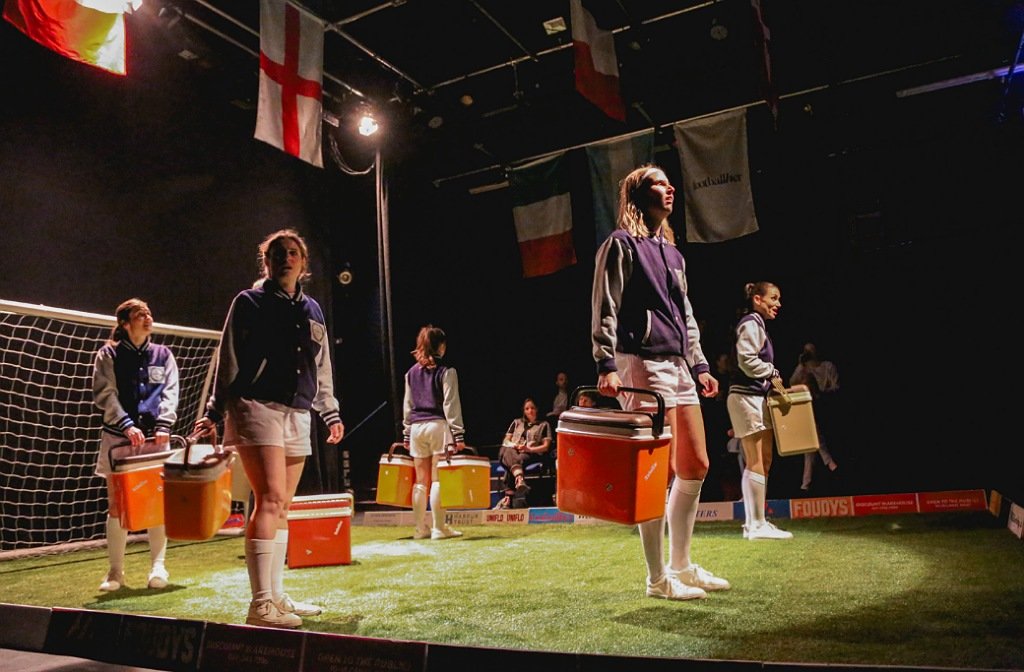
All of these women were subsequently banned from playing football upon their return from Mexico; a life-changing trip that took them from everyday wives and daughters to borderline celebrity status – a life sentence barely recognisable in today’s improved world of equality.
They would not see each other again for another 48 years.
However, I was most moved by the story of Mr Batt. There’s a heart-wrenching scene towards the end where Mr and Mrs Batt flit between ecstasy and crushing disappointment in the flick of a letter page as they learn their fates.
Indeed, through the general excitement of the players in that England team, there is always the underlying trepidation on stage of a man who knew deep down what going against the establishment would entail.

After the culmination of the 90-minute play, which received a standing ovation, the audience were treated to a supplementary Q&A from some of the members of the Lost Lionesses who answered questions from an intrigued crowd on all sorts of subjects.
From England caps to Serena Wiegman, from the path they helped forge to the story of super-fan Victor, there was one topic where the women on stage were all in loving agreement.
It was how highly they held Harry Batt in their thoughts. Their love for his leadership, for how he took a group of young women to the world stage; a bus driver from Luton who ended up ostracised from the very sport he loved. His crime? Leading a football team.
We’ll hopefully have more to come on Mr Batt soon, but in the meantime, my recommendations to see this play are as high as they ever could be.
‘The Lost Lionesses’ is running every night until Saturday 19 April at The Place Theatre in Bedford. All details of the show, along with the link to purchase tickets, can be found here.
Grab them now, you don’t want to miss it.
Tom Carr, Sport Editor at Bedford Independent, was given a free ticket to ‘The Lost Lionesses’ to facilitate this review.