
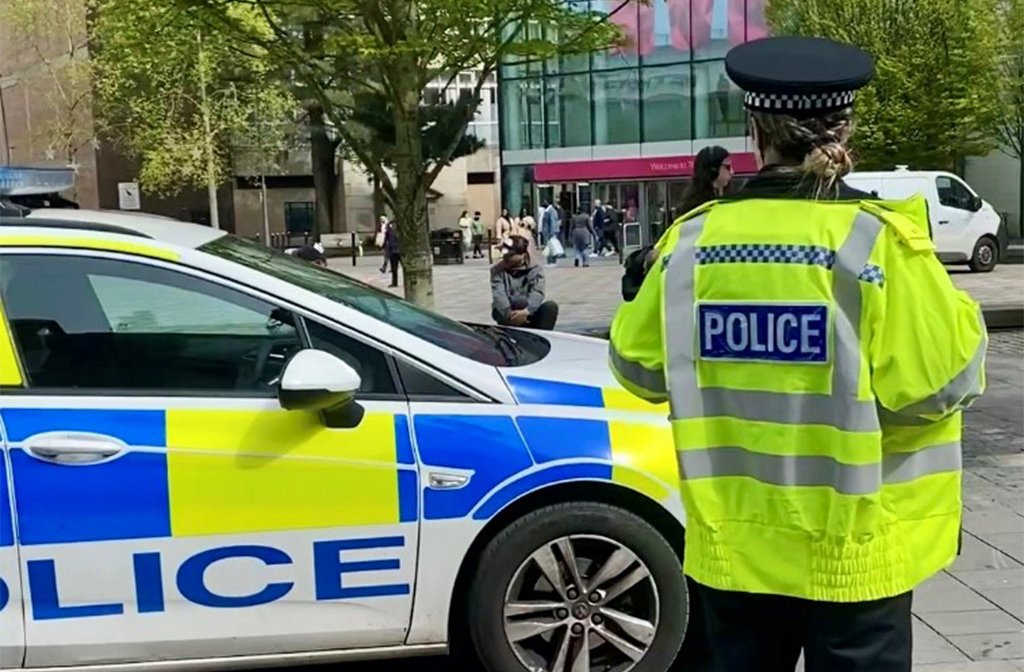
Bedfordshire Police funding is lagging dangerously behind rapid growth across our county, chief constable Trevor Rodenhurst KPM has warned in an exclusive interview with the Bedford Independent.
Speaking to us in the first of a four-part special on modern policing on Bedfordshire, the police chief warned that an outdated national formula is leaving local people short-changed.

Bedfordshire Police operates on a net revenue budget of £175 million for the 2026/27 financial year.
Central government grants provide 58% (£101.5 million), while local council tax payers fund the remaining 42% (£73.5 million).
To balance operational needs, police and crime commissioner John Tizard (Labour) secured Home Office approval in February to raise the police precept by 6.6%, adding £18.50 to an annual Band D council tax bill.
Read: Bedfordshire Police awarded “above average” funding settlement but shortfall remains
Despite that rise, official figures show Bedfordshire receives the lowest total funding per 1,000 population of any police force across England and Wales.
Between 2015 and 2024, our county experienced an 11% population surge while central government grant funding per head fell by more than 11%.

The postcode lottery
“Our funding gives us the lowest number of police officers per 1,000 population in England and Wales. It introduces an element of a postcode lottery that isn’t right,” said Rodenhurst.
He added: “Successive governments have said that they recognise this issue and they’re going to tackle it, but they haven’t.
“Some forces of a comparable population size don’t have some of the complexity, yet have considerably more officers.”
He estimated that the constabulary needs approximately 500 extra officers to deliver the visible neighbourhood presence that local communities expect.
The force currently relies on joint protective services with Hertfordshire and Cambridgeshire alongside strict priority-based budgeting to protect frontline response teams.
But Rodenhurst says the implications go further, and a properly funded police force is not just about policing.
“I really support the growth in the county as an opportunity for young people and local businesses.
“However, I am concerned that our situation is not receiving sufficient recognition, as we are a key enabler of successful growth.
“For every pound invested in policing, local business benefits by over £10.”
The figure comes from a July 2026 study commissioned by the National Police Chiefs’ Council, which found every additional £1 spent on policing delivers an estimated £10.70 in economic value to local firms.
Researchers revealed that crime acts as a hidden tax on commerce.
Chronic disorder and anti-social behaviour deter footfall, stall investment, and force businesses to spend money on private security rather than growth.
According to the report, a 10% drop in neighbourhood crime directly boosts commercial output, making visible frontline policing a key driver of high-street vitality.
Metropolitan crime on a shire budget
Bedfordshire is officially categorised under the Home Office formula as a rural shire force. However, detectives deal daily with complex, metropolitan-level criminality.
Our proximity to London brings serious organised crime, county lines drug distribution and high rates of knife crime along the M1 and A1 corridors.
Officers also police Luton Airport and Yarl’s Wood Immigration Removal Centre without receiving additional funds for these roles or any metropolitan-equivalent baseline funding.
To keep pace, the force has frequently had to rely on short-term special grants from the Home Office to target serious violence.
“We have had, over the years, some sticky plaster funding. That means special grants that are annualised where you have to apply for them and do not know if you are going to get them.
“That makes planning as chief more tricky,” the chief constable said.
An unprecedented population explosion

The resource shortfall is colliding with an unprecedented wave of development across the county.
Land has been earmarked for a major new town at Tempsford, while Universal Destinations & Experiences has begun site preparations for a world-class theme park and resort south of Bedford.
London Luton Airport is also expanding capacity to handle an additional 10 million passengers annually.
Read: Bedford Borough Council welcomes Luton Expansion green light
Mr Rodenhurst said: “In 10 years’ time, that part of Central Bedfordshire that is south of Tempsford, I anticipate will probably have a comparative demand of Biggleswade and Sandy combined.”
Read: Developer submits plans for 802-acre garden community near Tempsford
And major leisure developments will also generate considerable ripple effects across county infrastructure.
Rodenhurst added, “If you’ve got hundreds of thousands more people coming into Bedfordshire, using the road network, staying in our towns and using the nighttime economy, that creates demand factors for policing.
“There needs to be some mechanism that locks police funding and resources to that kind of growth.”
Read: “We chose Bedford”: Universal Studios exec on why the theme park is coming here
Rejecting the ‘no-go’ narrative

Concerns for funding aside, the chief constable is clearly proud to be Bedfordshire’s ‘top cop’ and champions the areas where Bedfordshire punches above its weight.
With events like Bedford River Festival and Luton Carnival celebrating the diversity and communities of our two biggest towns, which his force plays a major part in making successful, he directly addressed national political commentary about Bedfordshire.
Speaking after Conservative MP for Mid Bedfordshire, Blake Stephenson, claimed at the party conference last month that Luton contained “no-go” areas, Mr Rodenhurst offered a firm rebuttal.
“I am apolitical, but what I can do is fact-check a statement. There are no no-go streets in Luton or anywhere else in the county.
“Luton has a strong cross-community sense of place and cohesion. It is not helpful to characterise a place in that way, and it is not fair,” he said
Read: Bedfordshire Police deny “no-go zones” claims by Mid Bedfordshire MP
Funding debate
The national funding debate will reach its next critical milestone in mid-December, when the policing minister tables the provisional police funding settlement in Parliament.
MPs will debate and vote on the final financial orders early in the new year.
Locally, the Bedfordshire Police and Crime Panel will meet at Borough Hall in February to scrutinise the budget and finalise the local precept for the coming financial year.
In part two of our special series on Monday (2 November), we examine how Bedfordshire Police is turning to cutting-edge artificial intelligence to track domestic abusers and protect vulnerable women before perpetrators can strike.


