
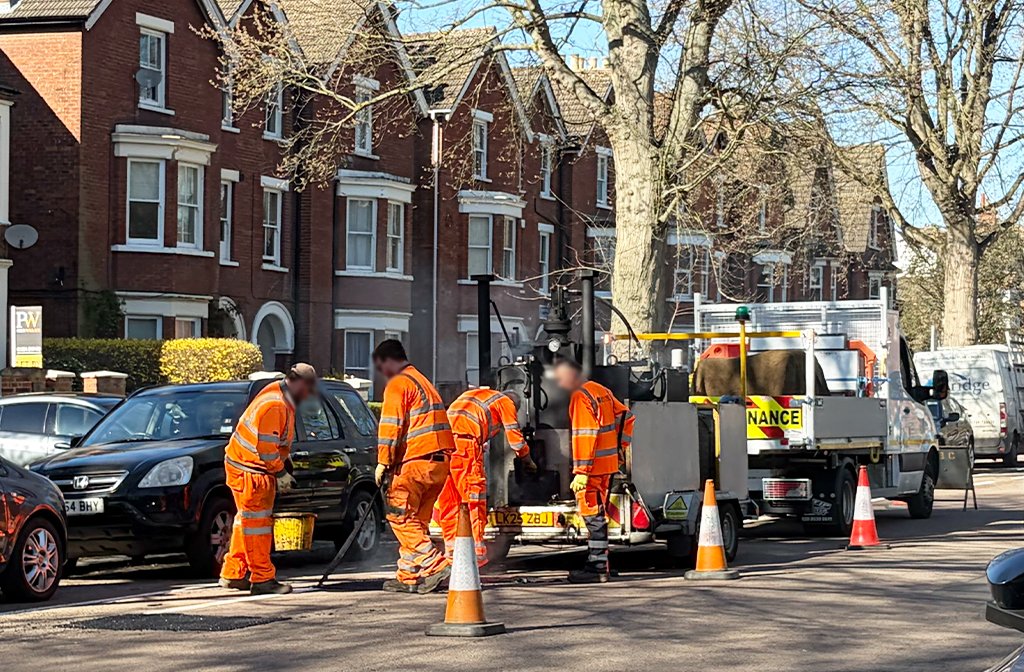
Bedford Borough Council manages an extensive 874-kilometre road network, balancing preventive resurfacing and emergency repairs across 543 miles of local highway.
During the 2024 to 2025 financial period, council highways teams reported filling over 6,300 potholes across the borough.

While sometimes a road surface must be completely replaced, preventive maintenance largely relies on surface dressing, a technique that seals road surfaces before winter moisture causes structural cracking.
The process extends road lifespan by creating a waterproof barrier and restoring skid resistance.
Surface dressing

Preparatory heavy repairs take place six to 12 months in advance, allowing initial patches to settle before crews sweep and clean the surface.
Crews then spray a bitumen binder across the road surface to act as glue and seal existing cracks against freeze-thaw damage.
Workers spread a 10mm layer of stone chippings over the bitumen, followed by a 6mm interlocking aggregate layer to restore surface grip.
Rollers press the chippings into place, with low-speed traffic further embedding the stone before final sweeping and fresh road markings are applied.
Local people can track upcoming maintenance across the borough using the highway network programmes schedule.
Pothole repairs

Highways inspectors check reported road defects within seven days of receiving a notification.
Potholes posing an immediate danger are made safe within 24 hours, often using temporary cold-lay material.
Permanent repairs follow within eight weeks, extending to 12 weeks if a full road closure is required.
Crews deploy specialised thermal repair systems that heat existing asphalt, blend in fresh material, and compact the surface for seamless fixes.
In rural villages, jet patching units clear loose debris with high-pressure air before blasting a bitumen and chippings mix into cavities.
Minor defects below the risk threshold are monitored and batched into larger scheduled maintenance runs to protect public funds.
Full road resurfacing
When a road is too badly worn for surface dressing, it needs complete resurfacing. This happens when the underlying layers have failed, or deep structural cracks have spread across the carriageway.
First, heavy machinery called a road planer mills off the old asphalt. Teams usually strip away between 30mm and 100mm of damaged road surface.
Next, workers clean the base layer underneath and fix any deep structural issues. They then spray a sticky bitumen emulsion coat to help the new material bond properly.
Paving machines lay fresh, hot asphalt across the road. Heavy rollers follow close behind to compact the surface while it is still hot.
Finally, ironwork like manhole covers and drains is adjusted so it sits flush with the new surface. Fresh lines and road markings are painted on once the asphalt cools down.
Because full resurfacing is a major operation, it usually requires road closures or temporary traffic lights. You can check the council website for planned major resurfacing on your street.
Reporting damage

Posting complaints on local social media groups does not log a formal maintenance request with council highways teams.
Bedfordians should report road defects through the council online pothole tool, using precise descriptions or What3Words coordinates.
Report failed repairs or dangerous hazards directly to the highways team, or re-flag them online with photographs.
Trunk roads
Major strategic routes passing through Bedfordshire, including the A1, M1, and A421, are managed by National Highways rather than local councils.
Borough council crews cannot maintain or repair potholes on these trunk roads.
Report defects or emergency hazards on the A1, M1, or A421 directly via the National Highways online reporting portal or by calling 0300 123 5000.
All other local public roads in the borough remain under the care of council highways teams working year-round.


