
The humanitarian aid convoy from Turvey, near Bedford, to Ukraine has been “shaken” by renewed Russian missile attacks on cities there yesterday (Monday) and in the early hours of this morning.
Team leader of the convoy, Rob Hammond, has been providing the Bedford Independent with reports of their trip to Ukraine. They headed out there to deliver a fire engine to firefighters in the city of Kharkiv, who are constantly battling to prevent fires from spreading across the city.
With Kharkiv so close to the front line, it was unlikely the team would deliver the fire truck to the city themselves and instead army personnel would collect it from Kyiv.
Russian attacks on the city and others had calmed in recent weeks and so Rob and his team had expected their stay to be relatively uneventful.
The news, however, that the bridge between Russia and Crimea had been destroyed at the weekend created concern that Russia would retaliate, and that concern was not unfounded.
Whilst the destruction of the bridge was cause for celebration in Ukraine, the country’s capital Kyiv, and other areas, prepared for retaliation.
“I was in the shower when there was a loud bang, soon followed by shaking windows and a low rumble you can feel through the floor of the bathroom,” says Rob from his hotel in Kyiv.
“A day later than expected, Russian missiles are now landing in Kyiv. I get a phone call from Tatiana, a Ukrainian from the UK who travelled with us, she says reception is asking everyone to come down to the basement.”
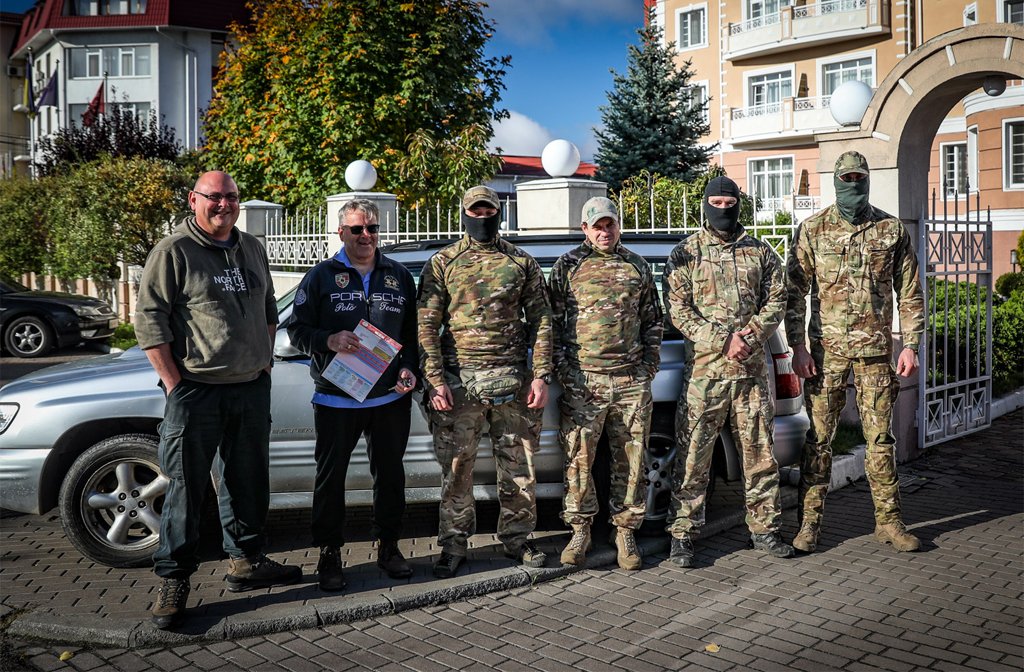
Despite the sound of bombs and the windows shaking as explosions rock the city, Rob says the army is constantly making sure they can get hold of the aid and resources they need.
“As we get to the bottom of the stairs we are greeted by five people in army uniform, these are our contacts to hand over the 4×4 Subaru, another vehicle, we have driven out to them.
“They have breakfast with us and seem completely unphased by the occasional boom outside, the floor no longer shakes so we think these sounds are air-to-air defence taking out rockets before they reach their targets.”
Time to leave
The team had intended to go to the army base and provide training for the fire truck they delivered the day before to Colonel Valery Markus, Commander of the 47th assault regiment, one of Ukraine’s top military leaders.
“I think this shows how desperately things like the fire truck are needed as we have never been met in person by anyone of such high rank on other trips,” says Rob.
“He is trying to rebuild the army of Ukraine from the old days of the Soviet Union and modernise the army.”
Instead, they are advised to stay at the hotel as the base could be a prime target for further Russian attacks.

“As we walk back to the hotel, Ben and Tony discuss their favourite toppings on baked potatoes,
“The others are waiting for us at the hotel wanting to know what the plan is now. Basically, there isn’t one. We need to wait.”
While the team’s spirit is still high, after handing over the fire truck and the Suburu, they consider whether they should stay or if the intensity of the attacks means they need to head home.
“Everything that needed to be delivered has been delivered,” says Robb, “but we had intended to stay and give training for the fire truck so we either wait to do that or head out of the city.”
News that the Russians may be deploying ballistic missiles and that the attacks are likely to intensify helps them make a decision.
At this point, the army says they’re tracking 40 more rockets and that roads around the city of Kyiv are being closed.
“We’re now heading back to Poland via Lviv, picking smaller roads to try and head out of the city, but there is loads of traffic, queues at petrol stations mostly spilling out onto the road, causing traffic and quite a few of the bridges around Kyiv are damaged.”
Thankfully, the team find they are making good progress and they arrive at Lviv, but the sight greeting them on arrival is not much better than what they left behind.
Panic
“Outside on the streets, [of Lviv] it is clear that yesterday’s apprehensive calm, has now been replaced by panic,” Rob says.
“A man and a small boy run into the petrol station behind us and push their way to the front of the queue. Nobody complains and they hand over cash and rush back out again. We pay for our drinks and go back outside.”

But Rob says the reaction is not the same for everyone, others who may be more battle wary, those who have lived through it all before, seem calm and accepting that this is just how life is.
Rob talks about an elderly gentleman in a flat cap sitting at a table to the side of the forecourt with his coffee, reading his newspaper in the sunshine.
“It seems as though he doesn’t have a care in the world as sirens wail past on the road and cars speed into the petrol station, fill up and then rush off right in front of him.”
Rob and his team are now back at the Polish border, and the dangers of missile attacks are replaced with the dangers of bureaucracy.
“The border crossing is moving fast but we’ve been stopped and the border guards want to do a full search of our vehicle,” Robb tells us.
It seems that even with all this going on, day-to-day social order is still being maintained.
While in Kyiv, Rob says he was even told off for smoking in the wrong place.
“Amongst all this, I was told I cannot smoke outside the doors of the hotel, I need to move to the smoking area or come inside.
“You have to love the Ukrainian spirit. Rules are rules even during wartime.”


