Building high-density, compact communities with built-in public transport is the only way to protect countryside and prevent endless car-dependent sprawl in Bedford Borough, experts have warned.
A report by the University of Hertfordshire’s Smart Mobility Unit argues that decades of low-density housing developments have swallowed up green space while leaving local people isolated without nearby shops, schools, or public transport.

Urban sprawl
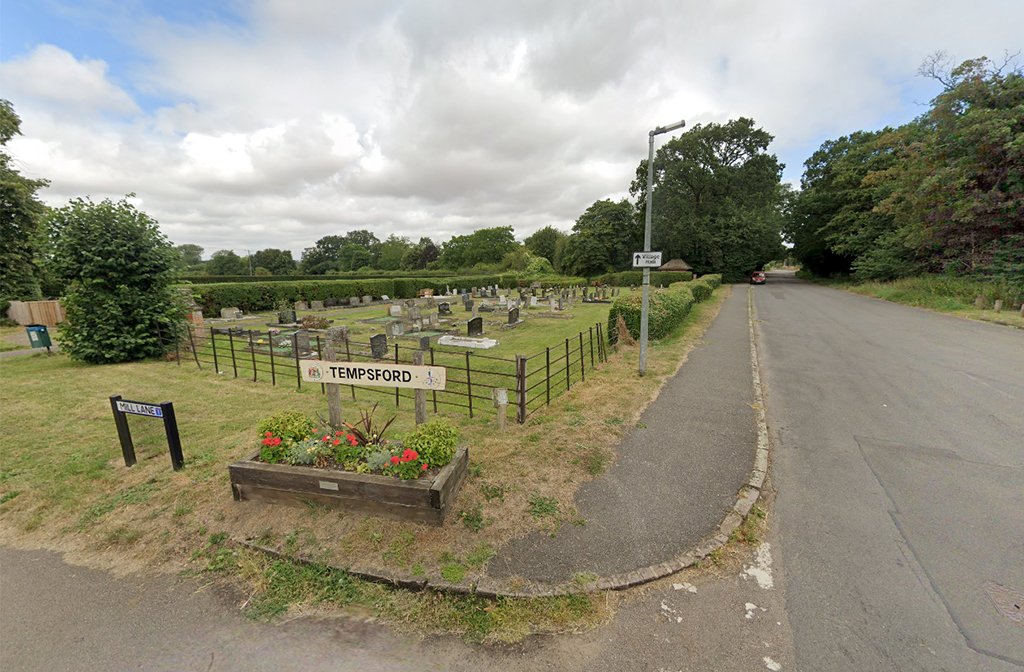
The findings come as Bedford Borough faces major expansion proposals, including outline plans for an 802-acre, 4,400-home garden community at Little Barford near Tempsford.
Read: Developer submits plans for 802-acre garden community near Tempsford
With ministers eyeing the wider Tempsford area for a potential government-backed new town along the Oxford-Cambridge growth corridor, researchers say planners must avoid repeating past development mistakes.
Central Bedfordshire Council leader Cllr Adam Zerny (Independent) recently highlighted the massive infrastructure demands posed by new settlements in the area, pointing out that unchecked development puts immense strain on local roads, floodplains, and existing healthcare infrastructure.
Read: CBC leader suggests Bedford Hospital be turned into housing if Tempsford New Town gets the go-ahead
Compact layout
The report, titled Better places: new settlements with transport that works, contrasts typical UK housing densities with international examples such as Freiburg in Germany.
While average UK developments deliver around 28 dwellings per hectare, Freiburg achieves between 90 and 135 dwellings per hectare through compact, low-rise designs centred around public transport corridors.
Co-author Stephen Joseph OBE said higher-density planning allows more homes to fit onto a smaller footprint, leaving significantly more space for local parks, nature reserves, and community hubs while cutting down on parking lots and road congestion.
Report findings
Stephen Joseph said: “Our report notes that much of the UK’s recent housing development has been of low density, with limited or no shops and community services, limited public transport and, sometimes, no pavements.
“This leads to car dependence with on- and off-street parking issues and wider impacts on people’s health and independence.
“It has been shown in the UK that we can build at higher density with less car use, but high-quality public transport must be in place from the beginning and fully integrated with the masterplanning of the developments.
“Germany solves this by using land value uplift and public funding to cover temporary transport subsidies for mass transit developments, but these funding routes are not really available in the UK at present.”
Local lessons
Researchers also examined developments in Cambridge, Cambridgeshire and Harlow, Essex, where housing density reached between 45 and 60 dwellings per hectare.
However, the study noted that fragmented local governance and separate planning authorities delayed delivery of promised active travel routes and integrated bus links.
For Bedfordians facing thousands of proposed new homes across the Borough, the report emphasises that compact layouts must bring daily amenities within walking or cycling distance from day one.
Delivery solutions
Co-authors Stephen Joseph OBE and Sue Walsh concluded that visits to Freiburg, Cambridge, and Harlow show “it is possible to deliver new housing without relying on and providing for high levels of car use”.
They noted that implementing “simpler governance, clear planning systems” and “stronger master plans” will help deliver connected communities across new developments.