
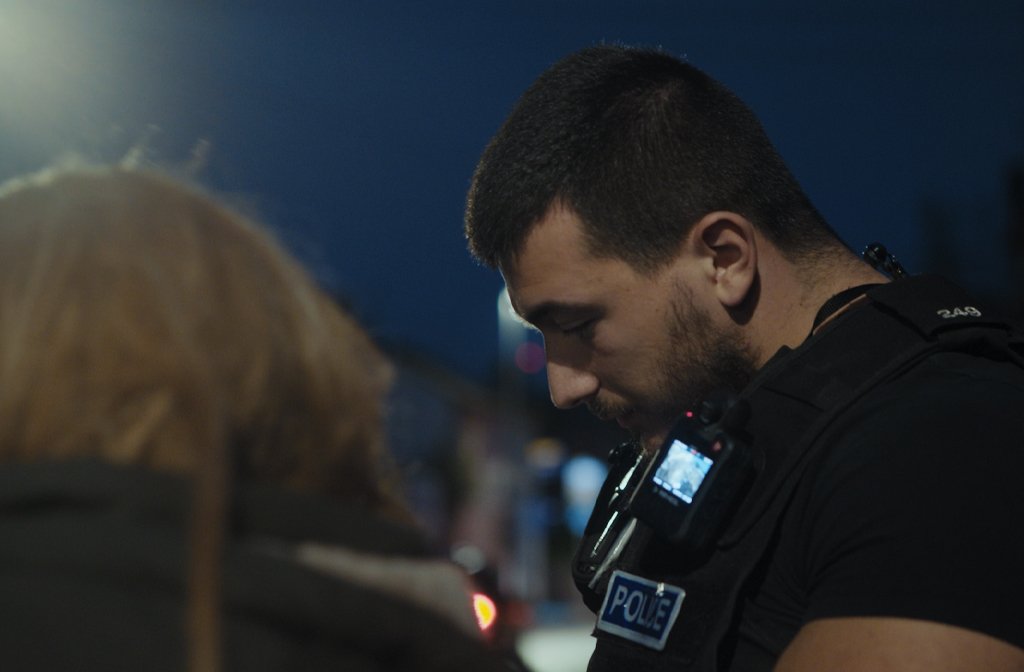
Bedfordshire Police frontline officers are facing 600 daily emergencies while propping up an overwhelmed mental health system, chief constable Trevor Rodenhurst KPM has warned.
Speaking to the Bedford Independent in part three of our four-part series on policing in Bedfordshire, the police chief detailed the immense personal strain on officers responding to traumatic incidents across the county.

Our series has previously explored how an outdated formula leaves Bedfordshire with the lowest funding per head in the country, alongside the constabulary’s pioneering deployment of artificial intelligence and virtual reality.
- Read: Outdated rural funding formula leaves Bedfordshire Police facing ‘postcode lottery’ warns chief constable
- Read: Fighting crime with code: AI and VR helping prevent domestic abuse and child exploitation in Bedfordshire
Now, the focus turns to the human cost on the street as emergency teams juggle major crime scenes, personal trauma and widening gaps in local healthcare.
Absorbing trauma on the frontline
Emergency demand across Bedfordshire has climbed sharply, jumping from 400 daily incidents four years ago to more than 600 today.
Despite the pressure, response teams answer almost 90% of 999 calls (87.7%) within 10 seconds and attend nearly 3,000 top-priority incidents every month.
Frontline teams have faced an extraordinary series of high-impact tragedies, including a triple murder, gang killings, two police shootings and a rail disaster with over 150 casualties.
Read: Bedford train crash report highlights technical faults and missed warnings
Mr Rodenhurst is concerned about the impact this is having.
“Those officers and staff are, you know, time and again, the same names and faces going to some of these things. Doing their very best for people, rarely getting off on time. And that has its toll.
“We were the first on scene to a rail disaster with more than 150 people injured. All of those things and more have been responded to by officers and staff from here, some on the same teams,” he said.
Read: Blunt force trauma caused Great Denham family deaths, post-mortem finds
The hidden toll of police trauma

This relentless exposure to severe trauma is taking a heavy psychological toll on all emergency workers, including police officers.
A landmark study by the University of Cambridge revealed that one in five police officers suffers from post-traumatic stress disorder (PTSD) or complex PTSD.
This rate is five times higher than that found in the general public.
Verified data from the Police Federation further highlights the scale of frontline burnout.
In its national Pay and Morale Survey 2026, they found 78% of officers reported experiencing stress, anxiety or low mood in the past year, with almost all confirming their work caused or aggravated the issue.
Among those affected, 59% blamed excessive workloads, while 28% pointed directly to traumatic or distressing incidents on duty.
To address the national crisis, the Home Office announced a £2.4m investment in police wellbeing in July, led by policing minister Sarah Jones.
The package will fund 150,000 clinical psychological risk assessments and lighter-touch mental health checks annually for operational officers.
It also rolls out force-wide trauma tracking, the ResetU fatigue recovery app and a 24/7 mental health crisis line.
While welcoming the funding, the Police Federation warned that the money must not become a temporary measure.
Union leaders stressed that short-term initiatives cannot solve chronic burnout when frontline officers remain exposed to repeat trauma without long-term workforce investment.
Acting as a mental health service of last resort
Frontline pressures in Bedford Borough are worsened because officers routinely plug holes left by struggling healthcare providers.
Officers are frequently delayed for hours at the Bedford Hospital emergency department because the town lacks a dedicated mental health crisis suite.
Mr Rodenhurst said: “What’s needed is a provision in Bedford that doesn’t currently exist, and there are plans to do that with the new chief executive hospital.
“It distracts us from the core mission that you’d want us to do if you called us and needed policing.
“It’s increasingly meaning that I’ve got officers taking people to places like A&E, when they need to be taking them and dropping them off at a mental health suite or ideally, mental health professionals coming and dealing with that person.”
When other public agencies are overwhelmed, local people inevitably turn to the police.
“Sadly, if someone can’t get an answer from a service, sometimes they ring us when they probably knew at the outset this wasn’t policing they needed, but they then phoned us because they know we’ll answer,” added Rodenhurst.
A vanishing safety net across Bedford

The pressure on local policing comes as regional mental health services prepare for severe budget reductions.
East London NHS Foundation Trust (ELFT), which provides mental health care across Bedfordshire, has drawn up plans to close a £25m financial deficit.
The proposals include cutting hundreds of jobs, with up to 330 roles at risk alongside reductions to community health programmes.
Unions representing health workers have raised deep concerns over the impact on vulnerable patients.
As reported in The Guardian, Richard Munn, national officer for health at Unite, said: “To see cuts to any mental health service is unfathomable and unacceptable.”
Responding to the concerns, an ELFT spokesperson told The Guardian: “Our approach is clinically led and focused on meeting the needs of our service users.
“We are working closely with our trade unions, colleagues and partners to identify the most effective and sustainable way to deliver the efficiencies required of us, while protecting the quality and safety of care.”
The healthcare reductions coincide with the recent closure of the SMART Prebend Day Centre in Bedford.
Read: SMART CJS announces closure of the Prebend Day Centre
The centre provided a vital daytime refuge for vulnerable neighbours struggling with homelessness, addiction and severe mental health distress.
Commenting previously on the compounding pressures facing emergency services, the Police Federation has warned that short-term wellbeing initiatives cannot solve chronic burnout while officers are left propping up cuts across wider public services.
Union leaders have also repeatedly stressed that mental health checks are no substitute for long-term workforce investment and properly funded community care.
Without dedicated community facilities and rapid mental health interventions, the burden falls back on frontline police officers to pick up the pieces.
However, a spokesperson for NHS Central East Integrated Care Board said that they were working with partners to ensure those who need it get the right support.
“We want to make sure that people experiencing a mental health crisis receive the right support, at the right time, and in the right place.
“This is a key priority in our strategic plan, and we are working closely with our colleagues in the mental health, police and ambulance sectors to improve crisis mental health services,” they said.
In the final part of our series tomorrow (Wednesday), we examine police conduct and culture, exploring how Trevor Rodenhurst is tackling misogyny within his own force and building an upstander culture from day one.
Update: This article was updated on 6 November 2026 at 16:02 to include a quote from NHS Central East Integrated Care Board.


